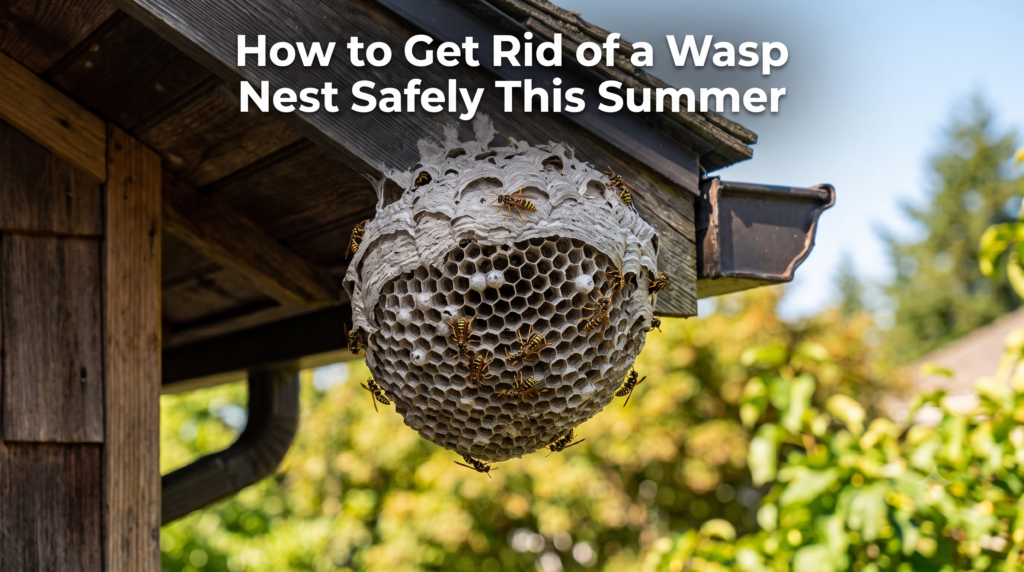
Finding a swirling cloud of stinging insects around your roofline is a quick way to ruin a summer afternoon. By mid-to-late summer, wasp colonies hit their peak size, making them aggressive, territorial, and incredibly stubborn. If you are dealing with an active colony near your deck, porch, or eaves, you need a clear action plan.
Here is exactly how to get rid of a wasp nest sawithout risking a trip to the emergency room, along with the critical mistakes you must avoid.
How To Get Rid Of A Wasp Nest Safely This Summer
Identify the Type of Wasp Nest First
Before you grab a can of spray from the hardware store, you need to know what you are dealing with. Not all stinging insects behave the same way, and their nesting habits dictate how you handle them.
Umbrella-Shaped Paper Wasp Nests
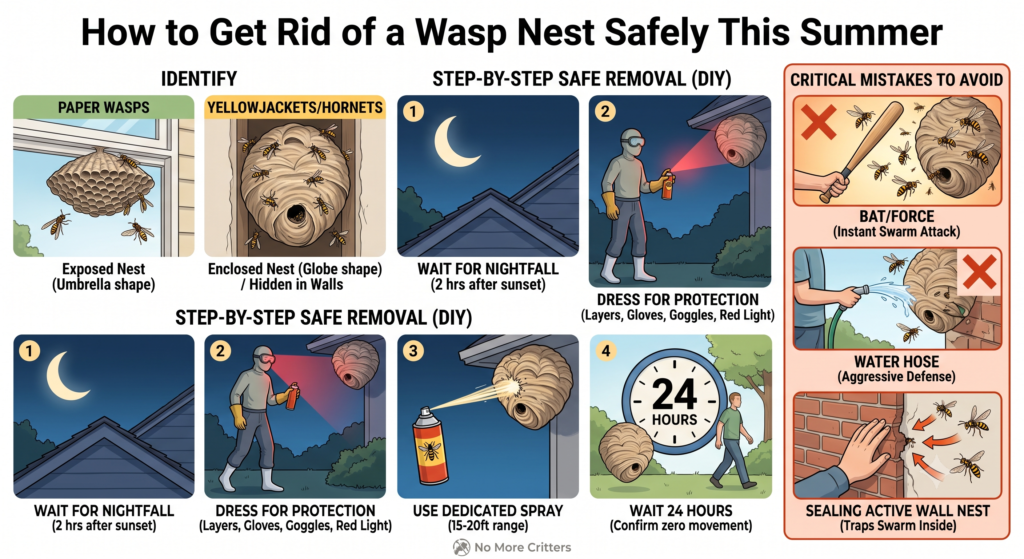
Paper wasps build exposed, circular nests that resemble an upside-down umbrella. These are often found hanging from window frames, door frames, or roof overhangs. While they will sting if provoked, they are generally less aggressive than their subterranean cousins.
Enclosed Yellowjacket and Hornet Nests
Yellowjackets and hornets are a completely different story. They build large, paper-covered globes with a single entry hole at the bottom. Often, they hide their colonies inside wall voids, attics, or underground burrows. If you see intense insect traffic coming out of a crack in your brickwork or a hole in the lawn, you are dealing with an enclosed colony that requires extreme caution.
Step-by-Step Guide for DIY Paper Wasp Nest Removal
If you have an exposed paper wasp nest that is relatively small and accessible, you can attempt to clear it yourself by following these precise steps:
- Wait for Nightfall: Wasps are diurnal, meaning they are active during the day. Wait until at least two hours after sunset when the entire colony is inside the nest and drowsy.
- Dress for Protection: Wear thick layers, heavy gloves, long sleeves, pants tucked into your socks, and safety goggles.
- Use the Right Spray: Keep your distance and use a dedicated aerosol wasp spray designed to shoot a stream fifteen to twenty feet. Do not use a flashlight directly on the nest, as the light can wake them up; use a red-filtered light instead.
- Spray the Entry Point: Thoroughly douse the nest, focusing heavily on the main opening. Leave the area immediately after spraying.
- Wait 24 Hours: Do not attempt to knock the structure down right away. Check the area the next day to ensure there is zero movement before removing the physical nest.
Three Mistakes That Will Get You Stung
When homeowners try to fast-track summer wasp control, things usually go sideways. Never attempt the following amateur methods:
Warning: Never use a baseball bat, water hose, or fire to destroy a live nest. Aggressive hornets and yellowjackets will instantly swarm out to defend their home, and you cannot outrun them.
Similarly, if a colony is hidden inside your home’s walls, never seal the entry hole while the insects are still alive. They will simply chew through your drywall to find an alternative exit, trapping a swarm inside your living room.
When to Call a Professional Exterminator
If the colony is larger than a tennis ball, located high off the ground, or built directly inside your walls, skip the DIY route entirely. A certified professional exterminator possesses the specialized protective gear and injection equipment required to eliminate the colony safely on the spot. Investing in professional treatment ensures the root of the problem is addressed without endangering your family.
More guides like this
Why Yellowjackets Are Crashing Your BBQ (And 5 Ways on How to Keep Yellowjackets Away From Patio Food)
4 min read
Do Mothballs Actually Repel Mice? The Truth (And Why Using Them This Way Is Illegal)
6 min read
What Do Cockroach Eggs Look Like? Species-by-Species ID Guide — Plus What to Do If You Find One
7 min read