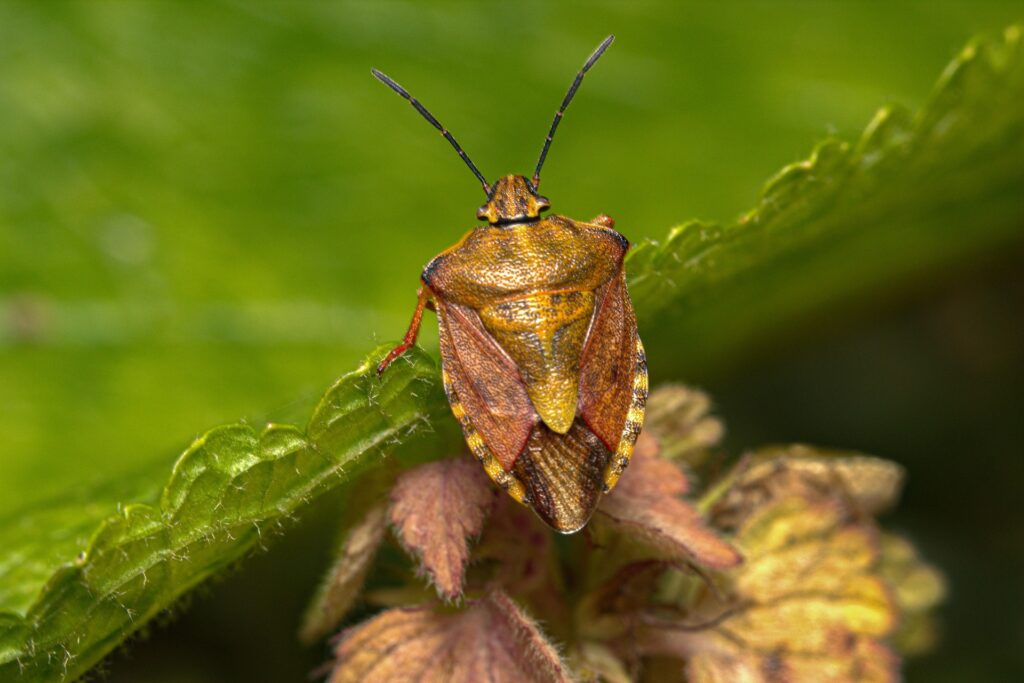
Stink bugs are notorious autumn invaders. As temperatures begin to drop in the late summer and early fall, these shield-shaped insects migrate toward residential properties in massive numbers, seeking out warm structural gaps to overwinter. Successfully managing them requires proactive external exclusion before they make their way into your living spaces.
The Complete Guide to Household Stink Bugs
Stink bugs are highly frustrating seasonal invaders that target homes en masse as the weather cools. While they do not bite, sting, or chew through structural framing, their sheer numbers and their defense mechanism—releasing a pungent, foul odor when disturbed or crushed—can make them an exhausting household nuisance.
1. Identification: Who is Clustering on Your Siding?
The single most common species found invading residential structures is the invasive Brown Marmorated Stink Bug (Halyomorpha halys).
Look closely at physical shapes, wing markings, and defensive behaviors to confirm what you are dealing with:
-
Physical Appearance: Stink bugs possess a highly distinct, rigid body shape that closely resembles a medieval shield. Adults measure about $17\text{mm}$ in length and are a mottled brownish-gray color. Under close inspection, you will see unique alternating light and dark bands on their antennae and along the exposed edges of their abdomen.
-
Locomotion and Sound: They are capable flyers, producing a loud, heavy, and distinct buzzing drone when in flight. They possess a clumsy landing style, frequently crashing into lampshades, windows, and walls before crawling slowly across surfaces.
-
The Telltale Smell: Their defining behavioral trait is their chemical defense system. When threatened, handled roughly, or crushed, specialized glands on the underside of their thorax release a pungent, lingering odor that smells like a mixture of intense cilantro, pungent spice, and rotten citrus.
2. Why They Enter & What Keeps Them There
Stink bugs are strictly outdoor agricultural pests during the spring and summer. They switch to an indoor mindset entirely based on changing thermal patterns.
-
The Autumn Hibernation Drive: In late September and October, adult stink bugs prepare to enter a state of winter hibernation (diapause). They are naturally drawn to the sun-warmed, south- and west-facing exterior walls of residential homes (especially brick or dark siding), which radiate heat.
-
Structural Gaps and Openings: As they crawl across warm siding, they seek out any narrow crack to escape the elements. They easily slip inside through unsealed soffit vents, gaps around window air conditioning units, loose siding trim, and tears in window screens.
-
Quiet Winter Harborages: Once inside the exterior shell of the house, they don’t look for food; they gather inside dark, undisturbed architectural voids like attics, crawlspaces, false ceilings, and interior wall framing to sleep through the winter.
3. Potential Harm & Damage
Anatomy of Risk: Stink bugs are structurally and biologically benign inside a home. They do not eat wood, destroy insulation, bite family members, or reproduce during the winter. Their threat profile is entirely focused on odor contamination and psychological distress.
Human, Child & Pet Health
-
Allergen Triggers: While they do not transmit transmissible diseases or bite, the accumulated presence of hundreds of stink bugs hibernating inside a confined attic space can aggravate respiratory allergies or asthma symptoms in sensitive children and adults when household dust is disturbed.
-
Pet Salivation Reactions: Stink bugs are non-toxic, but if a curious dog or cat bites or swallows one, the intense, bitter chemical defense spray can cause severe mouth irritation, excessive drooling, or temporary vomiting due to chemical irritation.
Damage to the Property & Interior
-
Surface Staining: When stink bugs are startled, they can exude a yellowish chemical fluid from their scent glands that can leave dark, permanent unsightly stains on light-colored luxury linens, expensive curtains, and painted drywall surfaces.
3.5 When to Bypass DIY and Call a Professional
While an occasional stink bug on a curtain can be managed by hand, large-scale structural swarms require targeted exterior containment.
3 Signs It’s Time to Call an Exterminator
-
Dozens Emerging from Outlets or Vents Daily: If fresh waves of stink bugs are constantly spilling into your living areas via electrical outlet plates, recessed light fixtures, or baseboard gaps during winter thaws, a massive colony is established inside your wall framing.
-
Inaccessible Attic Infestations: If your home features an unsealed attic or crawlspace where thousands of stink bugs are gathering out of physical reach, retail foggers will fail. A professional must use commercial-grade residual dusts to clear the void.
-
Massive Exterior Swarming in Early Autumn: If your home’s exterior siding is completely coated in hundreds of bugs in September, an exterminator must apply a professional power-spray barrier to the exterior walls to halt the migration before the insects find a way inside.
4. Prevention: How to Keep Them Out
Because stink bugs are highly resistant to retail insecticides once they have tucked themselves inside your walls, the entire secret to management is strict summer exclusion.
Structural Exclusion & Hardening
-
The Mid-August Seal: Walk your home’s exterior perimeter in August before the migration begins. Use clear silicone caulk to seal gaps around window frames, entry doors, utility pipe entries, and exterior outlets.
-
Inspect Mesh Screens: Check all window and attic ridge screens for tiny tears. Ensure door sweeps sit perfectly flush against the threshold, especially on garage doors.
-
Remove Window AC Units: Take window air conditioning units out before the autumn temperature drops, as the foam insulation pads around them are highly vulnerable entry points for crawling bugs.
Natural Deterrents (Scent Barriers)
Stink bugs possess an intensely acute sense of smell, and certain strong botanical scents thoroughly disrupt their desire to land on a surface.
-
Garbage and Mint Perimeter Spray: Stink bugs have a natural aversion to the scent of fresh garlic and peppermint essential oil. Spraying a mixture of water and pure peppermint oil heavily around window sills, door frames, and porch trim acts as an excellent, clean-smelling natural shield.
-
Damp Towel Traps: Hang a wet, damp white bath towel over a lawn chair near your outdoor foundation line at dusk in early autumn. Stink bugs looking for moisture and a resting spot will cluster tightly on the towel overnight. In the morning, shake the towel directly into a bucket of soapy water to neutralize them safely.
5. Control & Eradication Methods
Never swat or crush a stink bug indoors, as doing so releases their foul defense odor instantly and signals nearby bugs. Chemical bug bombs are highly discouraged; they leave carpets coated in chemical residue without reaching the bugs hidden inside the walls.
Treatment Protocols
-
The Soapy Water Capture (Step 1: Odorless Extraction): To capture a visible stink bug on a wall or curtain without triggering its scent glands, fill a wide-mouth jar or plastic tub with 5cm of water and a squirt of liquid dish soap. Hold the jar directly underneath the bug and gently nudge it from above. Stink bugs naturally drop downward when startled; they will fall straight into the soapy water, which breaks the surface tension and quickly drowns them without releasing their smell.
-
The Vacuum Sock Method (Step 2: Safe Mass Collection): If you have dozens of bugs clustering around a window sill, do not suck them directly into your vacuum canister—their crushed bodies will coat the interior components, causing your vacuum to blow a foul odor into the room every time you turn it on. Instead, slip a knee-high nylon stocking into the end of your vacuum extension hose and secure it with a rubber band around the rim. Vacuum up the bugs; they will be safely caught inside the nylon pocket. Pull the stocking out and submerge it directly into a bucket of soapy water.
-
Dusting Attic Boundaries (Step 3: Secure Upper Voids): For areas where stink bugs consistently gather to hibernate (like unfinished attics or crawlspaces), use a precision powder duster to apply a uniform coat of Food-Grade Diatomaceous Earth (DE) or Boric Acid Powder along floor boundaries and around window frames. When crawling bugs pass through the dust, it breaks down their outer shells, drying them out safely without using harsh chemical sprays.