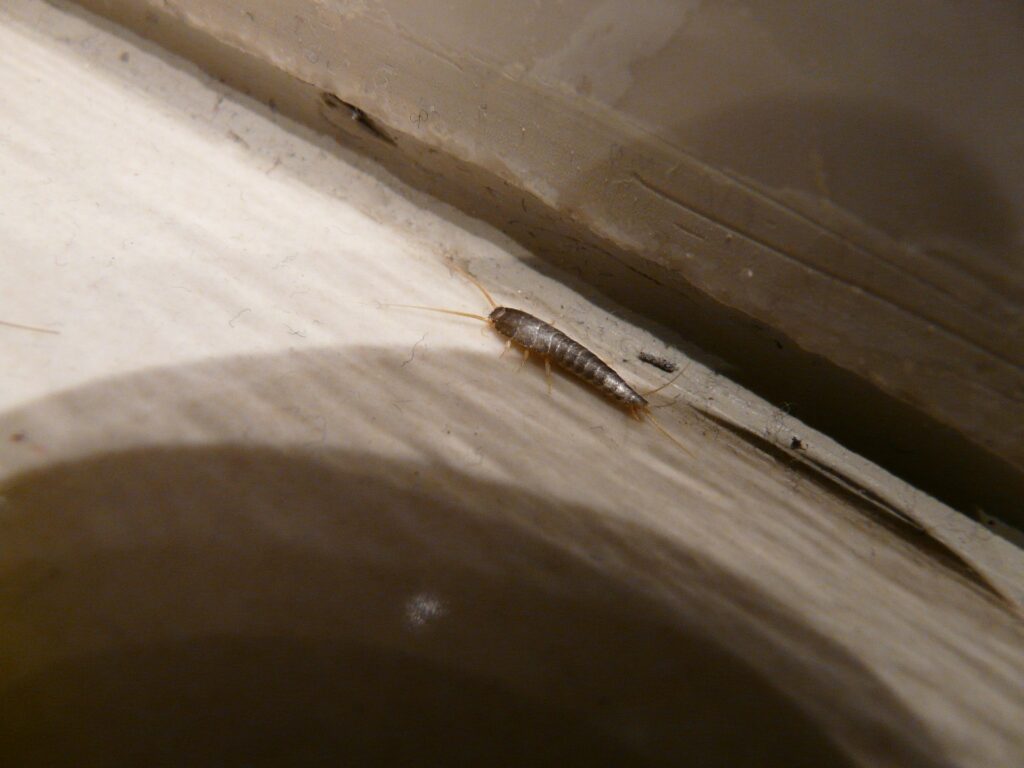
Silverfish are among the most primitive and ancient insects on Earth. Because they thrive in high-humidity environments and can survive for up to a year without food, a silverfish problem can persist quietly behind walls and wallpaper for a long time. Successful eradication requires reducing indoor moisture and protecting their primary target: starches, sugars, and paper goods.
The Complete Guide to Household Silverfish
Silverfish are nocturnal, fast-moving insects that love dark, damp spaces. While they do not bite or spread diseases, they are notorious fabric and paper pests that can quietly destroy book collections, important documents, wallpaper, and pantry dry goods if left unchecked.
1. Identification: Who is Slithering on Your Floors?
Silverfish get their name from their distinctive metallic, shimmering color and their unique, fluid, fish-like swimming movements as they scurry across flat surfaces.
Look closely at physical features, speeds, and behavioral signs to confirm an active infestation:
-
Physical Appearance: Silverfish have flat, elongated, carrot-shaped bodies measuring about $12\text{mm}$ to $19\text{mm}$ in length. They are completely wingless and covered in delicate, shiny, silvery-gray scales. They possess two long antennae on their heads and three long, hair-like appendages (tails) extending from the rear of their abdomen.
-
Locomotion: They are exceptionally fast ground runners but lack the biological ability to climb smooth, vertical walls. You will frequently discover them trapped at the bottom of porcelain bathtubs, glass jars, or deep ceramic sinks that they slipped into while foraging at night.
-
The Damage Markers: Because they are strictly nocturnal, you may notice their damage before seeing a live insect. Look for irregular, chewed holes in paper or cardboard, yellow outline stains on light fabrics, and tiny, dark, pepper-like fecal droppings left on shelving.
2. Why They Enter & What Keeps Them There
Silverfish are drawn to homes by two primary environmental factors: accessible starches (cellulose) and high ambient humidity.
-
High Humidity Hotspots: Silverfish require a relative humidity level between 75% and 95% to survive and reproduce. They enter through foundation gaps or crawlspace vents and migrate straight toward damp, humid zones like basements, bathrooms, laundry rooms, and unventilated attics.
-
The Starch and Sugar Diet: Their primary food source is cellulose, carbohydrates, and starches. They will aggressively feed on wallpaper paste, bookbindings, cardboard storage boxes, magazines, starched clothing, cotton, and linen fabrics.
-
Pantry Attractants: Inside kitchens, they seek out unsealed, dry, carbohydrate-rich goods. Open boxes of baking flour, white sugar, oats, cereal, and dry pet food provide them with a dependable, high-calorie food supply.
3. Potential Harm & Damage
Anatomy of Risk: The good news is that silverfish are completely non-venomous, do not possess biting mouthparts capable of breaking human skin, and do not transmit dangerous blood-borne pathogens. Their threat is strictly economic and cosmetic.
Human, Child & Pet Health
-
Zero Disease Vectoring: Silverfish do not carry or spread diseases to humans, children, or domestic animals. They are completely non-toxic if accidentally ingested by a curious dog or cat.
-
Allergen Triggers: As silverfish grow, they continuously shed their microscopic scales. In large, long-term infestations, this accumulated insect dust can mix with household dust, potentially triggering respiratory allergies or asthma attacks in sensitive children and adults.
Damage to the Property & Belongings
-
Destruction of Paper Goods: Silverfish can ruin irreplaceable items, including family photo albums, vintage books, tax documents, and wallpaper. They chew through the surfaces, leaving ragged edges and yellowed stains.
-
Fabric Ruin: They will eat through clothing stored in dark closets or basements, targeting natural fibers like cotton, silk, and linen, leaving small holes throughout the garments.
3.5 When to Bypass DIY and Call a Professional
While structural adjustments solve most silverfish issues, widespread infestations deep within structural layers require professional help.
3 Signs It’s Time to Call an Exterminator
-
Infestations inside Structural Insulation: If silverfish have nested deep inside the blown-in insulation of an attic or crawlspace where humidity is trapped, retail sprays and surface traps cannot reach them.
-
Multistory Multiplications: If you are seeing silverfish simultaneously in the basement, kitchen cabinets, and top-floor bedrooms, the population has spread through the home’s internal plumbing voids and wall framing.
-
Severe Property/Inventory Damage: For homeowners running a home-based bookstore, clothing archive, or document storage facility, an uncontrolled silverfish outbreak presents a major financial risk. A professional must apply targeted residual treatments to safeguard the inventory.
4. Prevention: How to Keep Them Out
Silverfish management is a game of moisture reduction. If you lower the indoor humidity, they cannot physically survive or hatch their eggs.
Moisture Control & Storage Habits
-
Deploy Dehumidifiers: Keep the relative humidity in your basement and crawlspaces below 50% using a heavy-duty dehumidifier. Fix plumbing leaks under sinks immediately and use bathroom exhaust fans during and after showers.
-
Ditch the Cardboard: Avoid storing books, seasonal clothing, or documents in cardboard boxes on the floor of basements or closets. Cardboard is a primary food source for silverfish. Transition your storage to airtight, hard plastic bins with rubber gaskets.
-
Seal Pantry Items: Move all flour, sugar, baking mixes, and cereals out of paper packaging and into airtight glass or hard plastic containers.
Natural Deterrents (Scent Barriers)
Silverfish rely heavily on olfactory navigation, and certain pungent botanical scents completely drive them away from storage zones.
-
Cedar Block Placement: Silverfish possess a natural aversion to the aromatic camphor oils found in cedar wood. Placing cedar blocks, rings, or shavings inside closets, dresser drawers, and pantry shelves acts as an excellent organic deterrent.
-
Clove and Lavender Pouches: Tucking small mesh pouches filled with whole dried cloves or dried lavender flowers into bookshelves and file cabinets creates a clean-smelling perimeter that silverfish avoid walking through.
5. Control & Eradication Methods
To completely eliminate an existing silverfish colony, you must trap the foraging adults while using long-lasting desiccant powders to target their hidden runways.
Treatment Protocols
-
The Glass Jar Trap (Step 1: Capture the Foragers): Create a highly effective, chemical-free trap by wrapping the outside of a clean glass mason jar with masking tape (which provides traction for them to climb up). Drop a piece of white bread into the bottom of the jar and place it in a dark area where you’ve seen activity. The silverfish will climb up the tape to get the bread, fall inside, and because they cannot climb smooth glass, they remain trapped until morning.
-
Perimeter Desiccant Dusting (Step 2: Dry Out Their Runways): Lightly puff Boric Acid Powder or Food-Grade Diatomaceous Earth (DE) behind baseboards, beneath major appliances, and inside deep wall cutouts around plumbing pipes using a precision powder duster. When silverfish scurry through the dust, it clings to their legs and bodies, slicing through their waxy protective coating and causing them to dehydrate and die safely.
-
Targeted Residual Application (Step 3: Secure the Gaps): For stubborn areas like crawlspaces or floor joists, apply a liquid permethrin-based residual spray (like EcoGuard Pro-Perm or standard structural crawling insect barriers) directly into the cracks and crevices. This establishes a protective boundary line that remains lethal to crawling silverfish for up to 60 days.