Spiders are among the most common arachnids to enter a household. While the vast majority of species are completely harmless and act as natural pest controllers by eating flies and ants, a few specific species possess venom that can pose medical concerns. Managing them requires shifting focus from chemical sprays to food-source elimination and structural exclusion.
The Complete Guide to Household Spiders
While spiders generate a lot of fear, most are completely accidental invaders or quiet tenants that prefer to keep to themselves. Successfully managing spiders means understanding what insects are drawing them inside and making your perimeter uninviting.
1. Identification: Who is in Your House?
Most household spiders are completely harmless, but it is critical to distinguish common web-builders from wandering hunters and the few medically significant species.
Look closely at physical features, web shapes, and nesting habits to confirm what you are dealing with:
-
Common House Spiders: Small to medium ($5\text{mm}$ to $8\text{mm}$), dull gray or brown with chevron patterns on their abdomens. They build messy, tangled “cobwebs” in dark corners, window frames, and basements. They are completely harmless.
-
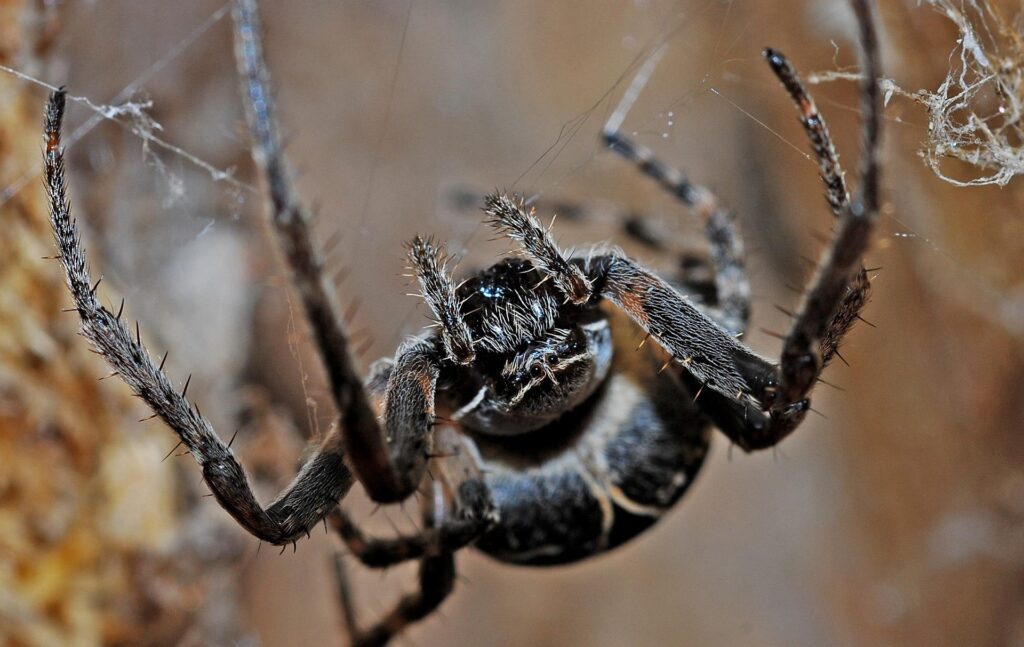
Wolf Spiders: Large ($10\text{mm}$ to $35\text{mm}$+), hairy, and robust with a distinct dark brown and gray camouflage pattern. They do not spin webs to catch food; instead, they run quickly across floors to hunt down prey. They can bite if squeezed, but their venom is mild.
-
Cellar Spiders (“Daddy Longlegs”): Characterized by incredibly long, thin legs and tiny, elongated bodies. They build loose, erratic webs in damp, dark locations like basements, crawlspaces, and under sinks. They are entirely harmless to humans.
-
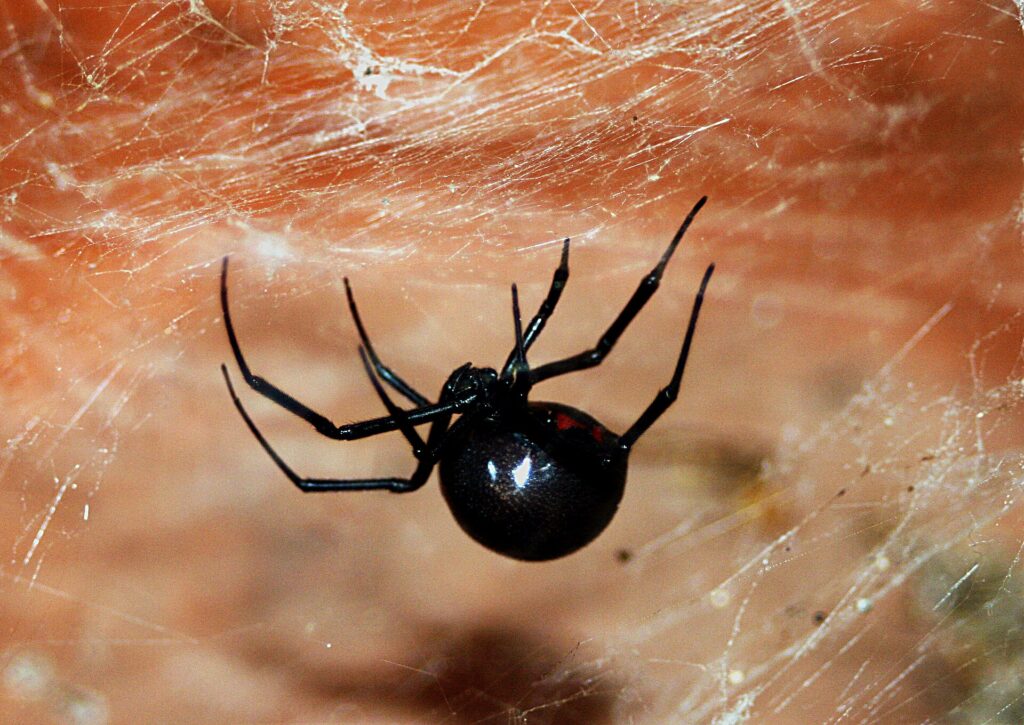
Medically Significant Species (US/North America): The Black Widow (shiny black with a bright red hourglass shape on the underside of its bulbous abdomen) and the Brown Recluse (light brown with a dark, violin-shaped marking behind its head). Black Widows prefer undisturbed areas like woodpiles or dark garages, while Recluses hide in quiet closets, boxes, and clothing voids.
2. Why They Enter & What Keeps Them There
Spiders do not enter your home to chew on your woodwork or eat your pantry food. They are strictly predators.
-
Abundant Prey (The Insect Buffet): If you have a noticeable number of spiders inside, it is a direct indicator that you have an underlying population of other insects. Spiders stay because your home provides a steady supply of flies, ants, moths, and silverfish to eat.
-
Mating Season Drives: In late summer and early autumn, many male wandering spiders (like Wolf Spiders) leave their outdoor habitats and accidentally slip under doors or through foundation vents while actively searching for females.
-
Seeking Sheltered Microclimates: Extreme outdoor weather—such as heavy summer rains or the drop in autumn temperatures—forces spiders to seek out stable, undisturbed environments like attics, basements, and crawlspaces to build their egg sacs safely.
3. Potential Harm & Damage
Anatomy of Risk: Spiders cause absolutely zero structural damage to property. They do not chew wood, destroy insulation, or contaminate human food resources. Their entire threat profile is limited to psychological distress and defensive bites.
Human, Child & Pet Health
-
Defensive Bites: Spiders do not hunt humans. Bites almost always happen accidentally when a spider is trapped against human skin—such as when sliding a foot into a shoe that has been sitting in the garage, or rolling over on one in bed.
-
Venom Concerns: Bites from common house spiders result in minor redness, swelling, and itching similar to a mosquito bite. However, a bite from a Black Widow delivers a potent neurotoxin causing severe muscle cramps, nausea, and intense localized pain. A Brown Recluse bite delivers a hemotoxic venom that can cause localized tissue damage (necrosis) around the wound. Both require immediate medical evaluation, especially for children or pets.
Damage to the Property
-
Aesthetic Nuisance: Cobwebs catch floating dust, pet hair, and insect carcasses, quickly making ceilings, light fixtures, and corners look neglected and unappealing to visitors.
3.5 When to Bypass DIY and Call a Professional
While standard household spiders can be handled with a vacuum and sticky traps, an infestation of medically significant spiders presents a serious safety risk. Attempting to clear these out yourself can cause them to scatter into living spaces or bite defensively.
Red Flag Species That Require Professional Treatment
Safety Warning: If you positively identify either of these species nesting inside your home, do not attempt to crush the webs or spray them with standard retail aerosols. Call a licensed exterminator immediately.
-
The Black Widow: Known for their highly potent neurotoxic venom. A mature female is shiny black with a bright red, orange, or yellow hourglass marking on the underside of her abdomen. They build irregular, messy, and remarkably strong webs in dark, undisturbed areas like crawlspaces, breaker boxes, under basement stairs, and firewood piles.
-
The Brown Recluse: Known for their hemotoxic venom, which can cause localized tissue destruction (necrosis). They are uniformly tan or brown with a distinct dark, violin-shaped pattern on their backs just behind the head. They are notoriously reclusive, nesting inside stored cardboard boxes, cluttered closets, clothing voids, and attics.
3 Signs It’s Time to Call an Exterminator
Even if you aren’t sure of the exact species, you should immediately bypass DIY methods and contact a licensed pest control professional if you experience any of the following:
-
Discovery of Egg Sacs in Living Areas: Finding multiple paper-like, silken spider egg sacs attached to furniture, framing, or baseboards means a breeding cycle is established indoors. A single sac can release up to 400 spiderlings inside your home.
-
Unexplained, Widespread Insect Activity: A sudden explosion of spiders everywhere indicates a massive, hidden food source. Exterminators must treat the root cause—the underlying infestation of flies, ants, or beetles—to successfully starve the spiders out.
-
Nests Inside Structural Voids: If spiders are emerging from behind electrical outlets, within heating vents, or deep inside dropped ceilings, retail surface sprays cannot reach them. Professionals use specialized equipment to inject dry insecticide dusts and expanding foams deep into wall cavities safely.
4. Prevention: How to Keep Them Out
Because spiders walk high on their legs and do not groom themselves with their mouths like insects do, standard chemical barrier sprays are rarely effective against them. Prevention relies heavily on changing the physical environment.
Structural Exclusion
-
Seal Gaps: Apply clear silicone caulk around exterior window casings, utility entry points, and outdoor outlets. Install tight-fitting screens on all crawlspace and attic vents.
-
Yellow Bug Lights: Swap out your standard white porch bulbs for yellow LED “bug lights.” White light attracts swarms of flying insects at night, creating a high-yield hunting ground for spiders directly around your doors. Reducing the insects reduces the spiders.
Natural Deterrents (Scent Barriers)
Spiders have highly sensitive taste and smell receptors on the tips of their legs, and walking over certain oils causes intense sensory irritation.
-
Peppermint Oil Spray: Spiders intensely dislike the scent of peppermint. Mix 15 to 20 drops of pure peppermint essential oil with water in a spray bottle and mist your baseboards, window sills, and doorways to form a natural invisible line they hesitate to cross.
-
Chestnuts and Citrus: Placing fresh horse chestnuts along window ledges or wiping down baseboards with diluted lemon juice acts as an organic, clean-smelling deterrent.
5. Control & Eradication Methods
Using chemical aerosol sprays to clear out spiders is highly inefficient. Total management relies on a mechanical approach that targets their physical presence and breaks down their reproductive cycle.
Treatment Protocols
-
Mechanical Removal (Step 1: Clear the Population): Use a vacuum cleaner equipped with a long hose attachment to directly suck up active spiders, their webs, and any visible silk egg sacs tucked into corners. Empty the vacuum canister or bag immediately into an outdoor trash bin to prevent caught spiders from crawling back out.
-
Deploy Sticky Monitors (Step 2: Catch the Hunters): Place pesticide-free sticky insect traps flat against baseboards, particularly behind furniture, near exterior doors, and in dark basement corners. These traps excel at catching wandering ground spiders like Wolf Spiders as they patrol your floorboards at night.
-
Target the Base Food Source (Step 3: Starve Them Out): Address the underlying insect issue. Treat for the ants, flies, or silverfish that are providing the spiders with a reason to live indoors. Without a steady food supply, surviving spiders will naturally relocate outdoors.