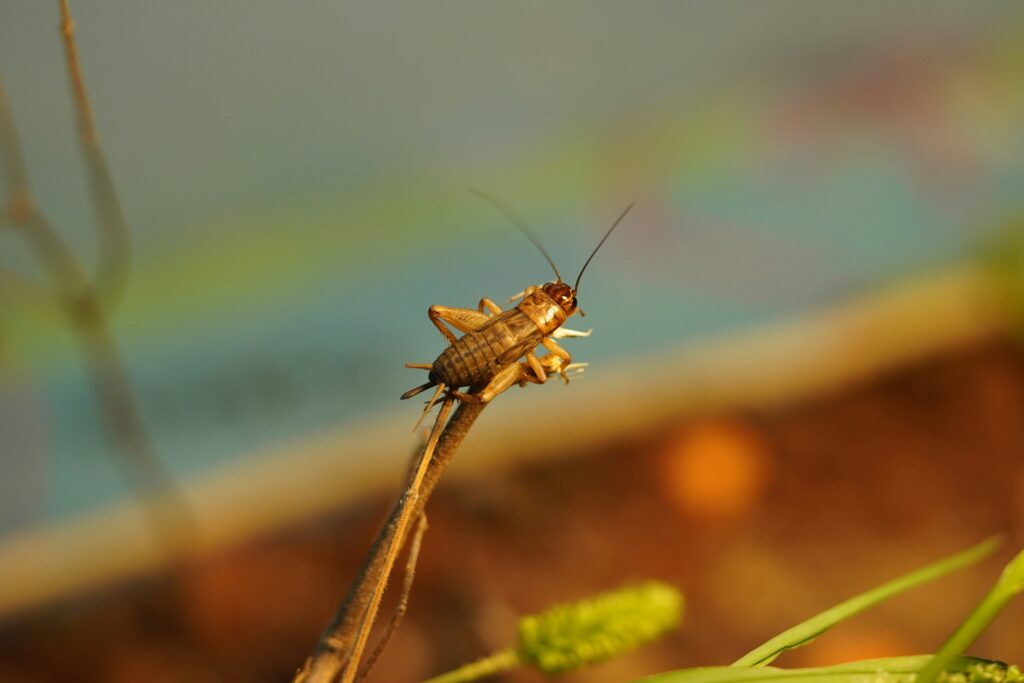
Crickets are among the loudest and most persistent late-summer pests. While they are primarily outdoor scavengers that provide a familiar soundtrack to warm nights, their constant chirping becomes an agonizing nuisance when they move indoors. Furthermore, once inside, their chewing mouthparts can cause surprising damage to household fabrics and paper goods.
The Complete Guide to Household Crickets
Crickets are fast-moving, jumping insects that frequently seek shelter inside residential properties as autumn approaches. While they do not bite or sting, a single cricket trapped inside a bedroom wall or basement ceiling can cause severe sleep disruption with its loud, repetitive chirping. Successfully managing them requires sealing your home’s exterior entry points and eliminating the damp hiding spots they rely on to survive.
1. Identification: Who is Chirping in Your Walls?
The two most common cricket species that invade residential properties are the Field Cricket and the House Cricket, though homeowners occasionally encounter the strange-looking Camel Cricket.
Look closely at physical features, coloration, and sounds to confirm what you are dealing with:
-
Field Crickets: Medium to large, robust, and shiny jet black or dark dark brown. They possess large hind legs built for jumping and long antennae. They are primarily outdoor pests that rush inside in late summer. They produce a loud, rhythmic chirping sound.
-
House Crickets: Slightly smaller, slender, and a distinct yellowish-brown or tan color with three dark bands across their heads. Unlike field crickets, they can live and reproduce completely indoors indefinitely if moisture is present. They produce a exceptionally high-pitched, continuous chirp.
-
Camel Crickets (Cave Crickets): Instantly recognized by their high, humpbacked appearance and lack of wings. They are light to dark brown and possess extraordinarily long legs and antennae. Crucial Identifier: Camel crickets cannot chirp and do not make any sound. They prefer dark, freezing-damp environments like crawlspaces and sump pump pits, and tend to jump directly toward threats when startled.
2. Why They Enter & What Keeps Them There
Crickets enter your home looking for stable temperatures, moisture, and shelter. They are highly active at night and are drawn toward properties by specific environmental cues.
-
Thermal and Moisture Drives: During late summer heatwaves or the first sharp temperature drops of autumn, crickets seek out cool, damp microclimates. They follow drafts of humid air escaping from basement windows, crawlspace vents, and gaps under doors.
-
Bright Exterior Lighting: Field and house crickets are highly nocturnal and possess a strong attraction to bright white outdoor lights. Standard porch lights draw hundreds of crickets to your doorways at night, placing them in prime position to slip inside when doors open.
-
Abundant Organic Matter: Inside basements and garages, crickets stay because they find plenty of foraging options. They are omnivorous scavengers that will happily eat decaying plant matter, dead insects, pet food crumbs, paper products, and cardboard storage boxes.
3. Potential Harm & Damage
Anatomy of Risk: Crickets do not possess stingers, their mouthparts are too weak to break human skin via biting, and they do not carry dangerous blood-borne pathogens. Their threat profile is limited to severe sleep deprivation and fabric destruction.
Human, Child & Pet Health
-
Sleep Deprivation: The loudest chirping is produced exclusively by male crickets rubbing their front wings together to attract females (stridulation). Because they are nocturnal, this sound peaks between midnight and 4:00 AM. A single cricket trapped inside drywall or under a heavy appliance can cause intense sleep disruption and psychological frustration for families.
-
Harmless to Pets: Crickets are completely non-toxic. If a domestic dog or cat hunts and eats an invading cricket, it poses zero biological health risk, though the insect’s crunchy exoskeleton can occasionally cause mild, temporary stomach upset.
Damage to the Property & Belongings
-
Fabric Destruction: When crickets are trapped indoors with limited food, they will aggressively chew on fabrics to harvest starches and organic residues. They target wool, silk, cotton, and synthetic blends—especially clothing or rugs soiled with sweat or food stains—leaving large, ragged holes that ruin the garments.
-
Paper and Box Ruin: They will chew through wallpaper, bookbindings, and cardboard storage boxes, weakening the storage containers over time.
3.5 When to Bypass DIY and Call a Professional
While individual crickets can be trapped or vacuumed easily, large-scale structural swarms require targeted commercial containment.
3 Signs It’s Time to Call an Exterminator
-
Chirping Coming From Multiple Internal Walls: Hearing distinct, separate chirping points deep inside your structural drywall or drop ceilings means the population has migrated through your utility channels.
-
Camel Cricket Overruns in Crawlspaces: If opening your crawlspace hatch or cellar door reveals dozens of large camel crickets jumping simultaneously, they have established an active breeding reservoir in the dark foundation layers that retail sprays cannot safely reach.
-
Mass Exterior Swarms: In certain agricultural or heavily wooded zones, changing seasonal dynamics can trigger massive local cricket migrations, causing thousands of insects to coat your siding and doors at once. An exterminator must apply heavy, professional granular perimeter bands to halt the march.
4. Prevention: How to Keep Them Out
An effective defense against crickets relies on changing your outdoor lighting layout and securing ground-level structural gaps.
Structural Proofing & Landscape Habits
-
Switch to Yellow LED Bulbs: Swap out your standard white incandescent porch and garage bulbs for yellow LED “bug lights.” Yellow light spectrums are invisible to crickets and other nocturnal insects, drastically reducing the number of pests drawn directly to your entry thresholds at night.
-
Seal Foundation Openings: Install thick, heavy-duty rubber door sweeps on all exterior doors, paying close attention to garage doors and basement walk-outs. Use silicone caulk to seal gaps around basement window casings and utility line penetrations.
-
Maintain a Clean Perimeter: Keep your lawn mowed short and pull thick wood mulch, dense ground cover, and stacked firewood at least 1 meter away from your foundation wall to eliminate their preferred outdoor daylight shelters.
Natural Deterrents (Scent Barriers)
Crickets possess highly sensitive chemical receptors that are deeply irritated by intense botanical scents.
-
Peppermint and Rosemary Spray: Mix 20 drops of pure peppermint or rosemary essential oil with warm water in a spray bottle. Clean your baseboards and spray heavily around basement floor borders, window wells, and doorways to form an aromatic line they hesitate to cross.
-
Molasses Decoys: Crickets are intensely drawn to the sweet scent of molasses. Placing small, shallow dishes of water mixed with a tablespoon of molasses outside your doorways acts as a natural decoy that catches and drowns scouting crickets before they find a way inside.
5. Control & Eradication Methods
Using chemical aerosol bug bombs inside living areas is highly discouraged for crickets; they fail to penetrate deep into structural voids, and simply cause the insects to scatter deeper into the framing. Meticulous physical placement and desiccant barriers are much more effective.
Treatment Protocols
-
Deploy Perimeter Glue Boards (Step 1: Intercept the Jumpers): Place pesticide-free sticky insect glue traps flat against baseboards, behind laundry machines, and in dark basement corners. Because crickets naturally hug walls as they jump and navigate in the dark, they will land straight on these boards and become permanently trapped, stopping their noise instantly.
-
Apply Long-Lasting Desiccant Powders (Step 2: Secure Lower Voids): Use a precision powder duster to puff a thin, uniform layer of Food-Grade Diatomaceous Earth (DE) or Boric Acid Powder directly into baseboard gaps, closet edges, and crawlspace expansion joints. When a cricket crawls through the dust, the microscopic particles cut through its protective outer shell, safely dehydrating and killing it without leaving toxic chemical residues inside your home.
-
The Targeted Vacuum Strike (Step 3: Direct Mechanical Clearing): For visible crickets or accessible ceiling voids, use a vacuum cleaner equipped with a long hose attachment to directly suck up the insects. The physical impact inside the hose usually neutralizes them. Crucial: Empty the vacuum canister or bag immediately into an outdoor trash bin to prevent any surviving crickets from finding a way back inside.