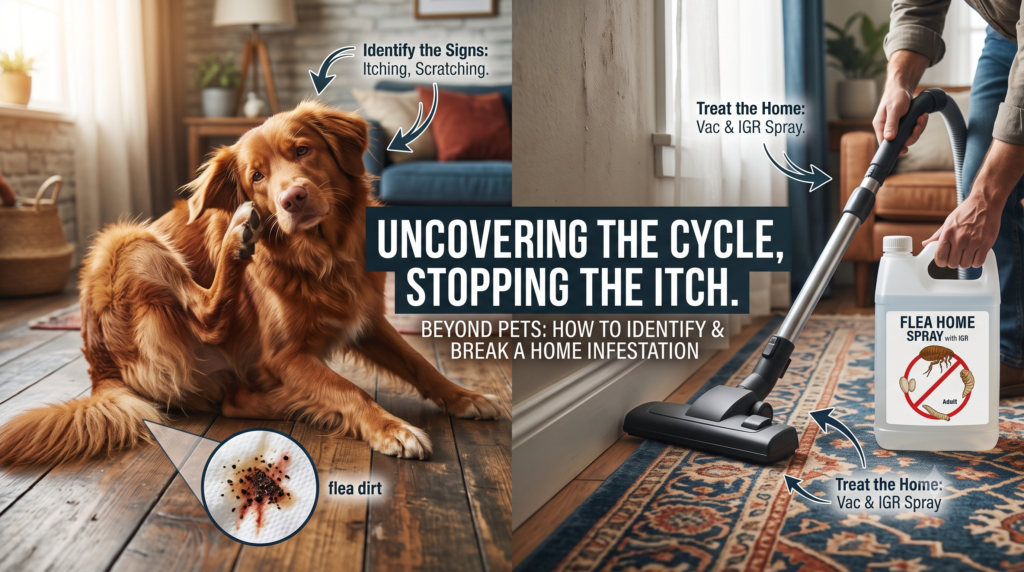
The scratching starts quietly. A back leg thumping the floor at 2am. An ear rubbed raw against the carpet edge. And then, if you’re paying attention, the moment you sit on the couch and feel something bite your ankle, and suddenly the whole room feels different.
Fleas are one of the most underestimated summer pests because the first signs are so easy to misread. An itchy dog in summer could be allergies, dry skin, or a grass sensitivity — and most people exhaust those possibilities before they think to check for Ctenocephalides felis, the cat flea, which despite its name is the species responsible for the overwhelming majority of household infestations, in homes with cats, dogs, and no pets at all.
Here’s how to tell if what’s happening in your home is actually fleas, what’s keeping the cycle going even after treatment, and how to break it completely.
How to Tell If You Have Fleas: The Definitive Check
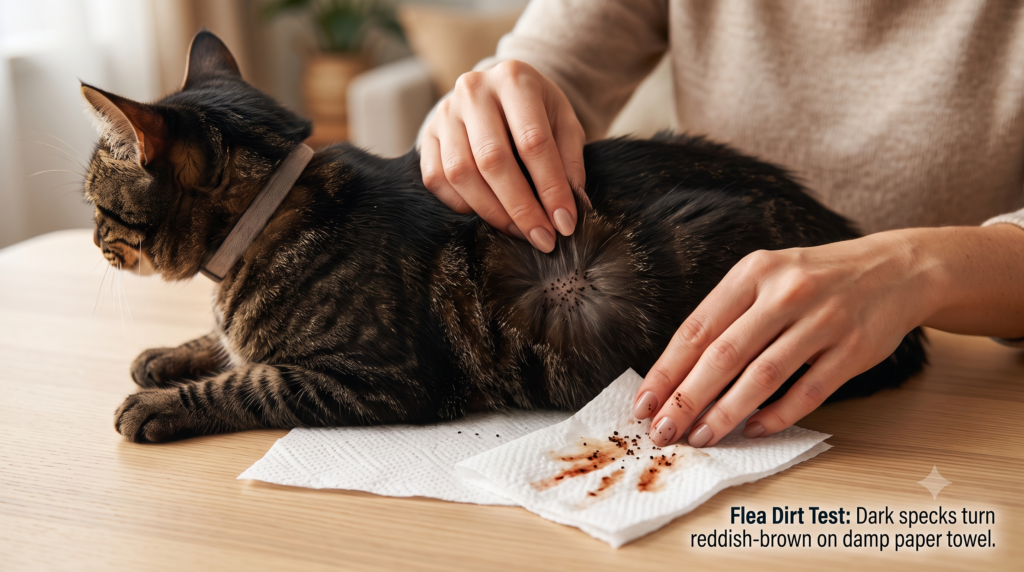
The flea dirt test is the fastest and most reliable way to confirm an active infestation.
Part your pet’s fur — especially around the base of the tail, the belly, and the inner thighs, where fleas concentrate — and look for small dark specks that resemble ground pepper. These are flea feces, composed almost entirely of digested blood.
Place a few specks on a damp white paper towel and press lightly. If they dissolve into reddish-brown streaks, you have confirmed flea activity. Regular dirt stays brown. Flea dirt bleeds red.
Other signs to look for:
- Your pet scratching or biting persistently at the same spots (base of tail, neck, belly)
- Hair loss or raw patches in areas the pet can reach
- Small, itchy red bites on your own ankles and lower legs — often in clusters of three, appearing in straight lines
- Pale gums in a small pet (in severe infestations, flea feeding can cause anemia)
- Visible movement in the pet’s fur: adult fleas are 1–3mm, dark brown, laterally compressed — they move fast and jump when disturbed
Why Summer Is Flea Season
Ctenocephalides felis eggs hatch fastest between 70–85°F. At summer temperatures, the full cycle from egg to biting adult compresses to as little as two weeks. A single female lays up to 50 eggs per day — and those eggs don’t stay on the pet. They fall off wherever the animal goes: the couch cushion, the dog bed, the corner of the carpet the pet always presses into.
By the time adult fleas are visible on your pet, the environment is already seeded with eggs, larvae, and pupae in far greater numbers. For every adult flea found on a pet, research estimates 95 eggs, larvae, and pupae exist in the surrounding environment. The pet is the symptom. The house is the problem.
What’s Keeping the Cycle Going After You’ve Treated
This is where most flea control fails — and it’s worth understanding precisely why.
Flea pupae are coated in a sticky, chemically resistant casing that makes them nearly impervious to most insecticides. They can remain dormant inside this casing for months, waiting for the vibration, warmth, and CO2 that signals a host nearby before emerging. A newly hatched adult can go from pupa to your pet in seconds.
This is why a single treatment — even a thorough one — almost always results in a rebound infestation two to three weeks later. The treatment killed the adults. The pupae survived.
What it actually takes to break the cycle:
- Treat the pet with a veterinarian-recommended flea product, either oral (like nitenpyram for immediate kill, or afoxolaner for monthly protection) or topical (selamectin, fipronil). Over-the-counter flea collars vary widely in effectiveness; the Seresto collar has independent efficacy data. Generic or natural alternatives often do not.
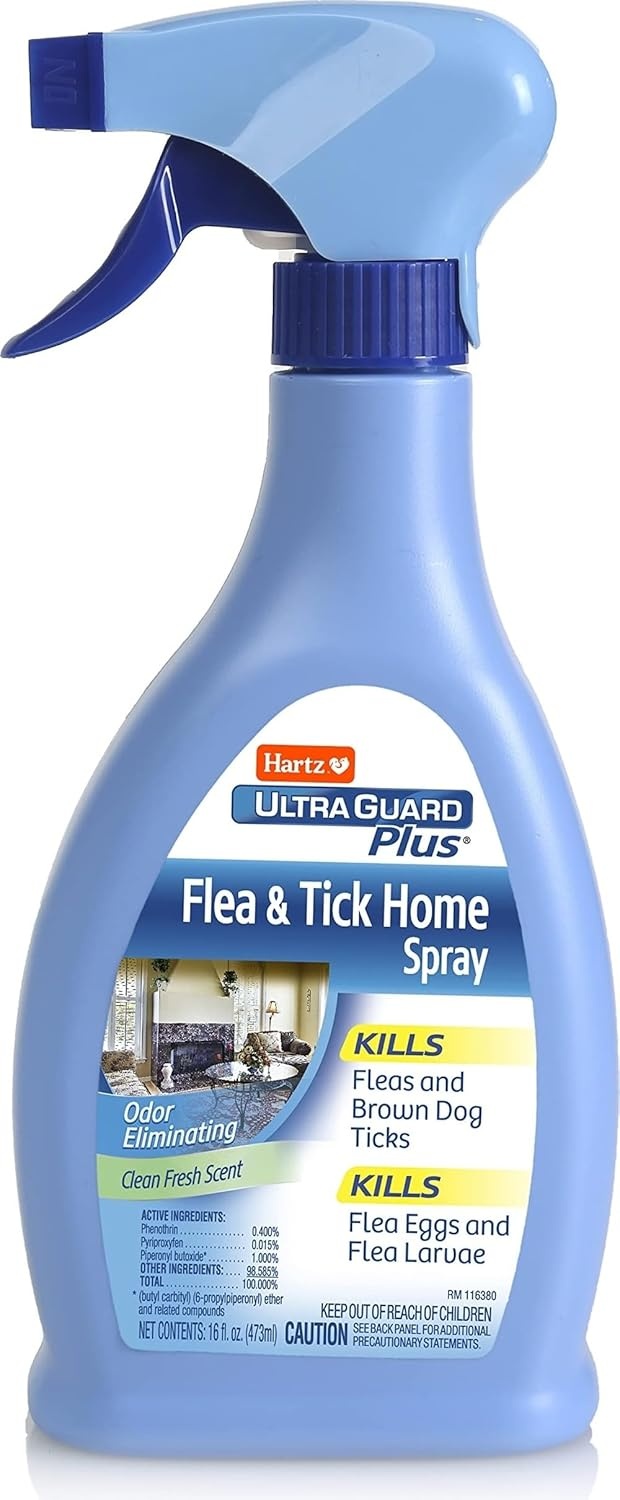
- Treat the home with an insect growth regulator (IGR) — pyriproxyfen or methoprene — which prevents eggs and larvae from developing into adults. This is the piece most DIY treatments miss. A spray that kills adults without an IGR leaves the developmental stages untouched.
- Treat the yard if the pet has outdoor access, focusing on shaded areas and spots where the pet rests. Fleas avoid direct sun.
- Vacuum aggressively, every day during active infestation, including along baseboards, under furniture, and in corners. Vacuuming mechanically removes eggs, larvae, and pupae — and the vibration triggers pupae to hatch into the IGR-treated environment, where they can’t survive.
Repeat the home treatment in two weeks. By then, the pupae that survived the first application will have hatched. A second treatment catches that generation before it reproduces.
What If There’s No Pet? Where Did the Fleas Come From?
This is the question that surprises homeowners most often. Ctenocephalides felis doesn’t need a domestic host to establish in a home.
Wildlife hosts — raccoons, opossums, stray cats, squirrels — can carry fleas that fall off in a crawlspace, under a porch, or near a foundation gap. The fleas develop in the protected, humid environment under the structure and enter the home through gaps in flooring, baseboards, or utility penetrations.
Previous tenants are another common source in rental properties. Flea pupae can survive for months without a host. Moving into a unit that previously housed a pet, even one that’s been vacant and cleaned, can result in an infestation appearing weeks after move-in — triggered by the warmth and movement of new occupants.
In both cases, the treatment approach is the same: treat the environment with an IGR, address the harborage site (under the porch, the crawlspace, any gap where wildlife shelters), and be prepared for a second wave two weeks later as dormant pupae hatch.
When to Bring in a Professional
A flea infestation that persists through two complete treatment cycles — pet, home, and yard, with an IGR, two weeks apart — is either still finding an untreated source, or is coming from a harborage site that requires structural access (a crawlspace, a wall void where wildlife has nested). At that point, professional pest control with targeted application to inaccessible areas is the right move, not a third round of the same approach.
For help finding a vetted local pest control provider, our pro locator is here.
For the complete flea identification and treatment guide, including product recommendations and species differences, see our full flea page.
No More Critters provides vetted pest identification and treatment information for homeowners. This site is a free service to assist homeowners in connecting with local service providers. All contractors and providers are independent. This site does not warrant or guarantee any work performed.
Filed under