Fleas are among the most persistent and frustrating parasitic pests a homeowner can encounter. Because they feed exclusively on the blood of warm-blooded hosts and lay hundreds of eggs that drop directly into carpets and upholstery, a flea problem can quickly spiral out of control. Successful flea management requires treating your pets, your home’s interior, and your yard simultaneously to completely break their life cycle.
The Complete Guide to Household Fleas
Fleas are legendary survivors capable of causing immense physical discomfort to both pets and humans. Because a single female flea can lay up to 50 eggs per day, an infestation can establish itself deep within your living spaces long before the first adult insect is spotted. Eliminating them completely requires targeting the microscopic eggs and larvae hiding in your floors.
1. Identification: Who is Inhabiting Your Carpets?
Fleas are incredibly tiny, wingless parasites. Because they move primarily by jumping long distances, catching a visual confirmation can be difficult without knowing exactly what to look for.
Look closely at physical traits, jumping behaviors, and environmental signs to confirm an active infestation:
-
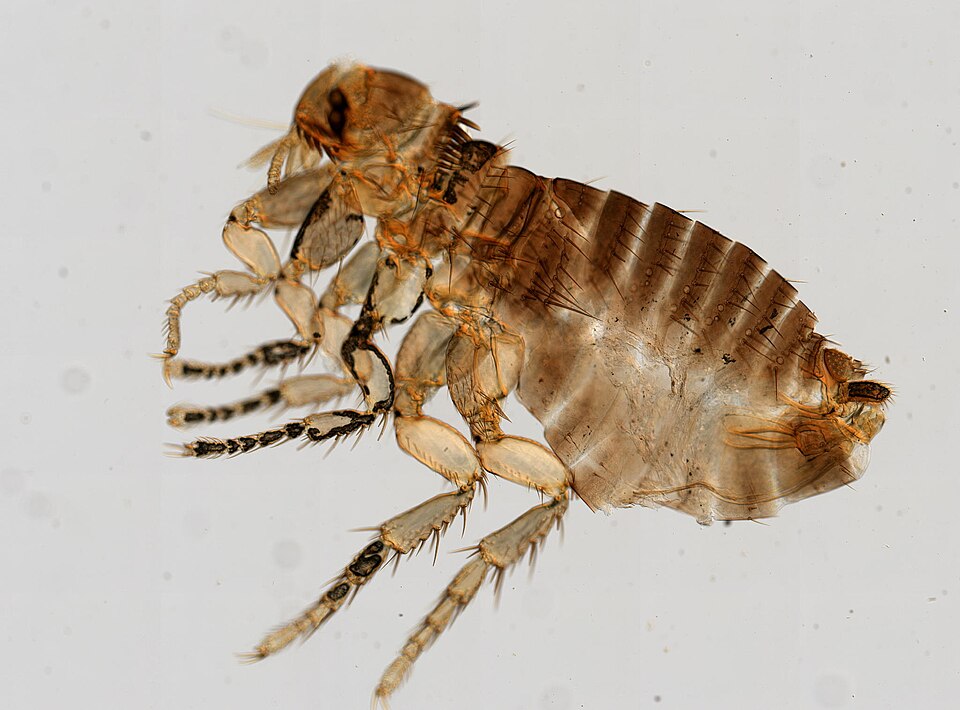
Physical Appearance: Adult fleas are minute, measuring just $1.5\text{mm}$ to $3\text{mm}$ in length. They have flat bodies that are compressed from side to side, allowing them to navigate easily through dense animal fur or carpet fibers. Their coloration ranges from reddish-brown to almost jet black.
-
Locomotion: Fleas cannot fly. Instead, they possess powerful hind legs that allow them to leap up to $30\text{cm}$ ($12\text{ inches}$) horizontally and vertically, frequently launching themselves from floorboards onto passing ankles or pets.
-
The Telltale “Flea Dirt”: Often, you will spot flea debris before you see the insects themselves. Flea dirt looks like small grains of black pepper scattered across your pet’s skin, bedding, or favorite rugs. The Water Test: Collect some of these black specks on a wet white paper towel. If the specks dissolve and turn reddish-brown (due to digested blood), it is a positive confirmation of flea dirt.
2. Why They Enter & What Keeps Them There
Fleas do not hitchhike into homes on fruit or garbage; they enter entirely via live hosts and establish themselves because of warm, fibrous hiding spots.
-
Hitchhiking on Wildlife and Pets: Fleas are typically brought onto your property by urban wildlife like raccoons, opossums, stray cats, and squirrels. When these animals cross your yard, flea eggs fall off into the grass. Your domestic dog or cat walks through the lawn, picks up the newly hatched adults, and carries them straight into your living room.
-
Fibrous Incubators: Once inside, fleas drop their smooth, non-sticky eggs continuously. These eggs roll off your pet and settle deep into the base of carpet fibers, between hardwood floorboards, inside pet bedding, and along the seams of upholstered sofas.
-
The Shared Host Supply: Fleas stay because they have a constant, dependable food supply. Adult fleas will anchor themselves to a host and can live for several months, feeding continuously and reproducing rapidly as long as pets or humans are present.
3. Potential Harm & Damage
Immediate Health Priority: Fleas are aggressive blood-feeders that present direct dermatological and biological health hazards to children, adults, and domestic animals.
Human, Child & Pet Health
-
Flea Bite Dermatitis & Allergies: Flea bites typically manifest as clusters of tiny, intensely itchy red welts, frequently concentrated around human ankles, shins, and feet. Many pets suffer from Flea Allergy Dermatitis (FAD), a severe allergic reaction to flea saliva that causes intense scratching, raw skin, and localized hair loss.
-
Pathogen Transmission: Fleas are biological vectors for dangerous diseases. They can transmit Murine Typhus and Cat Scratch Disease (Bartonella henselae). Additionally, if a pet or child accidentally swallows an infected flea while grooming or playing, it can introduce Tapeworm infections (Dipylidium caninum) into their digestive tract.
-
Anemia in Vulnerable Pets: In severe, untreated infestations, small puppies, kittens, or elderly pets can suffer from life-threatening iron-deficiency anemia due to the sheer volume of daily blood loss.
Damage to the Property
-
Zero Structural Ruin: Fleas cause absolutely no physical or cosmetic damage to drywall, wood, or framing. Their threat is focused entirely on the health and physical comfort of the home’s inhabitants.
3.5 When to Bypass DIY and Call a Professional
While rigorous cleaning can clear minor outbreaks, entrenched or widespread flea populations frequently require professional-grade tools.
3 Signs It’s Time to Call an Exterminator
-
Multiple Failed Treatment Cycles: If you have treated your pets and bombed your home multiple times, yet new waves of biting fleas continue to emerge after 3 to 4 weeks, the infestation has reached deep inside subfloors or wall voids.
-
Infested Crawlspaces or Subfloors: If feral wildlife has nested beneath your porch, inside crawlspaces, or in an attic, they leave behind massive reservoirs of flea pupae that retail sprays cannot safely reach.
-
Severe Human Target Swarming: If stepping onto your carpets results in dozens of fleas immediately jumping onto your bare skin or legs, the ambient population in the home is too dense for basic vacuuming and retail sprays to manage safely.
4. Prevention: How to Keep Them Out
An effective defense against fleas focuses on maintaining a strict pet preventative routine and making your outdoor landscape inhospitable to wildlife.
Veterinary Care & Structural Habits
-
Year-Round Preventatives: The single most effective way to prevent a household flea problem is keeping your dogs and cats on a consistent, year-round flea preventative (such as oral chews or topical treatments recommended by your vet). These treatments kill adult fleas instantly upon biting, preventing them from laying eggs inside your home.
-
Wildlife Exclusion: Keep your yard tidy by mowing lawns regularly and clearing away dense brush piles where wild animals hide. Seal off gaps leading beneath porches, decks, and crawlspaces with heavy wire mesh to keep wild hosts away from your foundation.
Natural Deterrents (Scent Barriers)
-
Cedar Chips: Fleas possess a strong aversion to the natural volatile oils found in cedar wood. Spreading aromatic cedar shavings along fence lines, outdoor pet runs, and landscaping borders adjacent to your doorways acts as a powerful natural deterrent.
-
Citrus & Rosemary Mists: Wiping down window sills and spraying baseboards with a highly diluted solution of water and lemon or rosemary essential oils creates a clean-smelling perimeter that foraging fleas avoid.
5. Control & Eradication Methods
If you already have an infestation, simply spraying a contact-killer chemical will fail. You must use a strategy that strips away adult fleas while simultaneously using an Insect Growth Regulator (IGR) to stop the invisible eggs and larvae from maturing.
Treatment Protocols
-
The Thermal Deep Vacuum (Step 1: Disrupt the Pupae): Vacuum every inch of your floors, carpets, rugs, and upholstered furniture thoroughly. Pay special attention to baseboards, dark corners, and areas beneath furniture. The physical vibration and heat of the vacuum cleaner forces hidden flea pupae to hatch prematurely, making them vulnerable to your treatments. Crucial: Immediately seal the vacuum bag or canister contents into a plastic trash bag and discard it in an outdoor bin. Wash all pet bedding in hot water and dry on high heat for at least 30 minutes.
-
Apply Growth Interruptors (Step 2: Deploy an Indoor IGR): Spray all carpets, rugs, and baseboards with an indoor residual spray containing an Insect Growth Regulator (IGR) like methoprene or pyriproxyfen. While standard bug sprays only kill adult fleas, an IGR acts as birth control for the environment—it permanently hardens flea eggs and deactivates larvae, preventing them from ever developing into biting adults.
-
Perimeter Desiccant Dusting (Step 3: Secure Hiding Crevices): Lightly puff Food-Grade Diatomaceous Earth (DE) or boric acid powder into deep carpet fibers, closet edges, and beneath heavy appliances using a powder duster. When crawling flea larvae come into contact with the powder, it physically absorbs their waxy outer protective layer, causing them to dehydrate and die safely without the use of harsh chemicals.