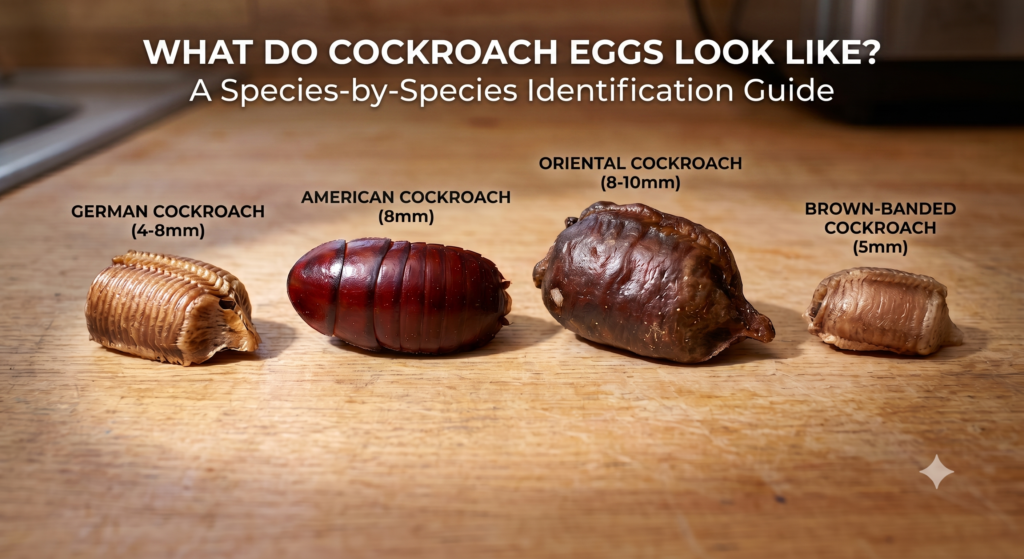
You found something small, brown, and capsule-shaped behind your stove. Or tucked into the hinge of a cabinet. Or stuck to the back panel under the sink. And now you’re wondering: is that what I think it is?
Understanding what cockroach eggs look like is the first step — and it matters, because the species determines where to look, how to treat, and how urgent your timeline is. Here’s the identification guide, plus what to do the moment you find one.
What Is a Cockroach Egg Case (Ootheca)?
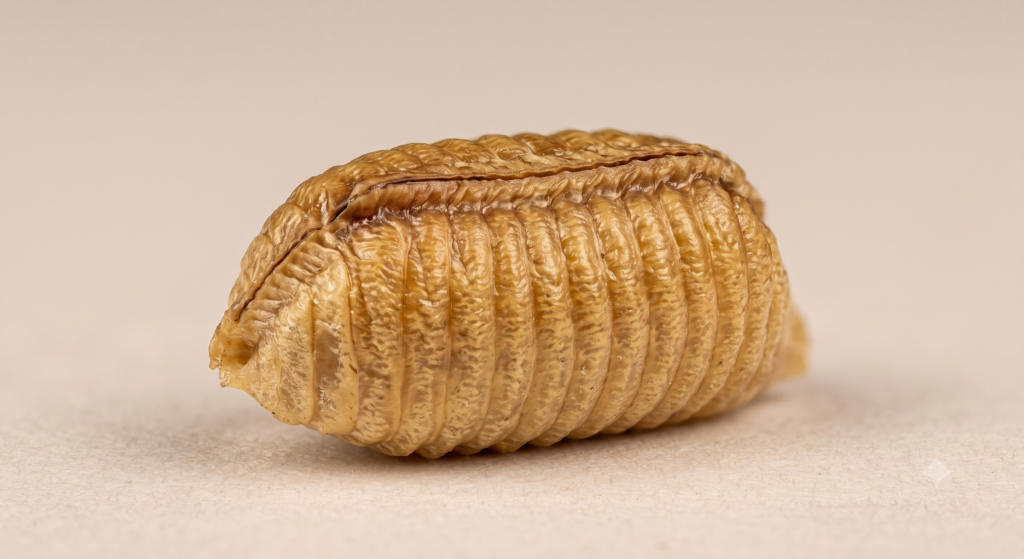
Cockroaches don’t lay individual eggs the way many insects do. Instead, a female produces an ootheca — a hardened protein capsule that holds anywhere from 15 to 50 eggs, depending on the species. The casing protects the eggs from dehydration and, to some extent, from pesticides.
Finding an ootheca means a female was present, reproduced successfully, and has an established route in your home. One found early is a very manageable problem. A population that’s been breeding for two or three months without discovery is considerably harder to turn around. That’s why finding and acting on an egg case quickly actually matters.
What Do Cockroach Eggs Look Like — Cockroach Egg Case Identification by Species
The four species most commonly encountered in U.S. homes each produce a distinct ootheca. Here’s what to look for:
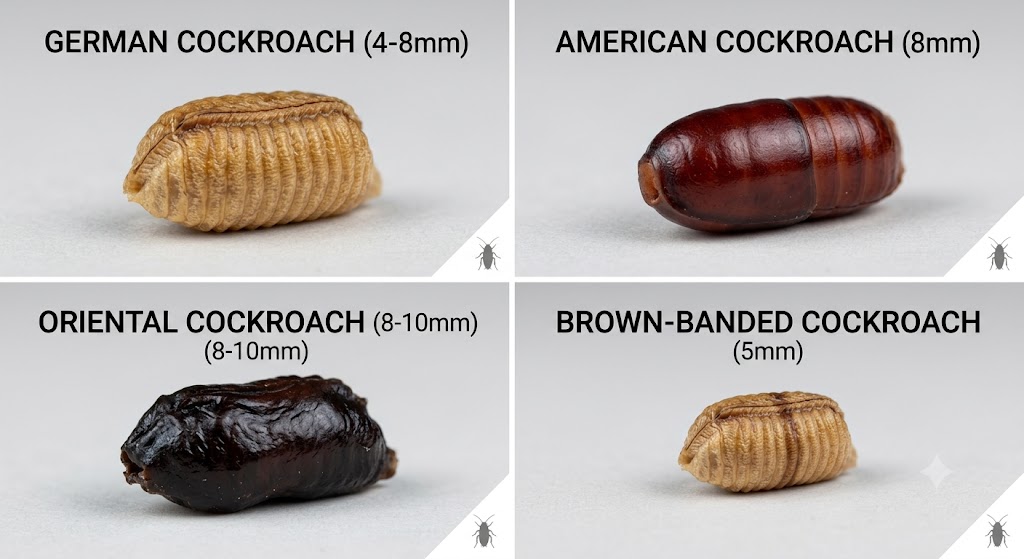
German Cockroach (the most common indoor species in North America)
- Size: small, 4–8mm
- Color: yellow-brown to tan when fresh; darkens to brown as it ages
- Texture: ridged surface with a visible seam along one edge
- Distinguishing feature: the female carries the ootheca attached to her body until just before hatching — if you see a cockroach with what looks like a brown protrusion at her rear end, she’s carrying an egg case with 30–48 eggs inside
- Found: on surfaces near food and water sources, in cabinet interiors, behind refrigerators
American Cockroach
- Size: larger, around 8mm
- Color: dark red-brown to mahogany
- Texture: smooth with a slight ridge along the top
- Distinguishing feature: deposited singly and glued to surfaces with a secretion; found one at a time rather than in clusters
- Found: basements, floor drains, areas near water heaters
Oriental Cockroach
- Size: 8–10mm
- Color: dark brown to nearly black
- Texture: slightly lopsided or irregular shape compared to other species
- Found: damp, cool areas — basements, crawlspaces, floor drains, under sinks
Brown-Banded Cockroach
- Size: smaller, around 5mm
- Color: lighter brown, sometimes with a yellowish tint
- Texture: similar ridged structure to German roach but smaller
- Distinguishing feature: deposited in elevated locations — this species prefers height, hiding egg cases on upper cabinet shelves, behind picture frames, and inside electronics
Old egg cases that have already hatched will have small, clean exit holes along the seam and feel hollow or brittle. Fresh cases feel firm and slightly waxy.
Where Do Cockroaches Lay Eggs in the House?
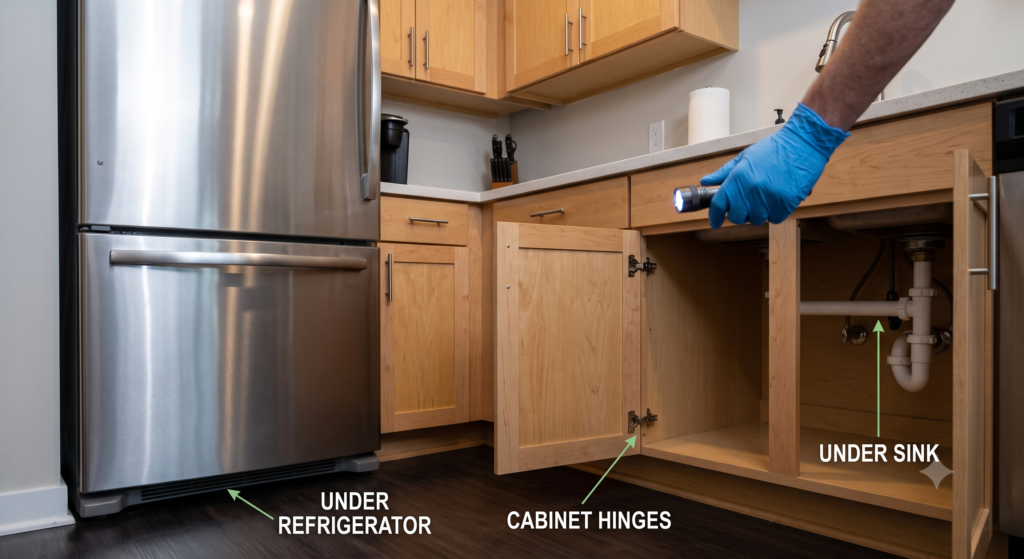
Search these locations in order of priority:
- Under and behind the refrigerator — warm, dark, and close to food. The single most common hiding spot for German cockroach egg cases.
- Behind and under the stove — particularly along the underside and around the back panel.
- Inside cabinet hinges and along cabinet back panels — run your hand or a flashlight along the interior back corners of every kitchen cabinet.
- Under the sink — along drain pipes, in the cabinet corners, and on the underside of the sink basin.
- Behind loose wallpaper or peeling paint — a gap between wall covering and drywall is exactly the kind of protected space cockroaches seek.
- In cardboard boxes and paper bags — an underestimated harborage. Cockroaches are strongly attracted to cardboard; egg cases deposited in stacked boxes can go unnoticed for months.
- Bathroom vanity interiors — hinges, drain area, under the basin.
- Upper shelves and electronics (brown-banded specifically) — above the refrigerator, in the clock radio, behind the television.
How to Get Rid of Cockroach Eggs Safely — Including With Pets and Kids
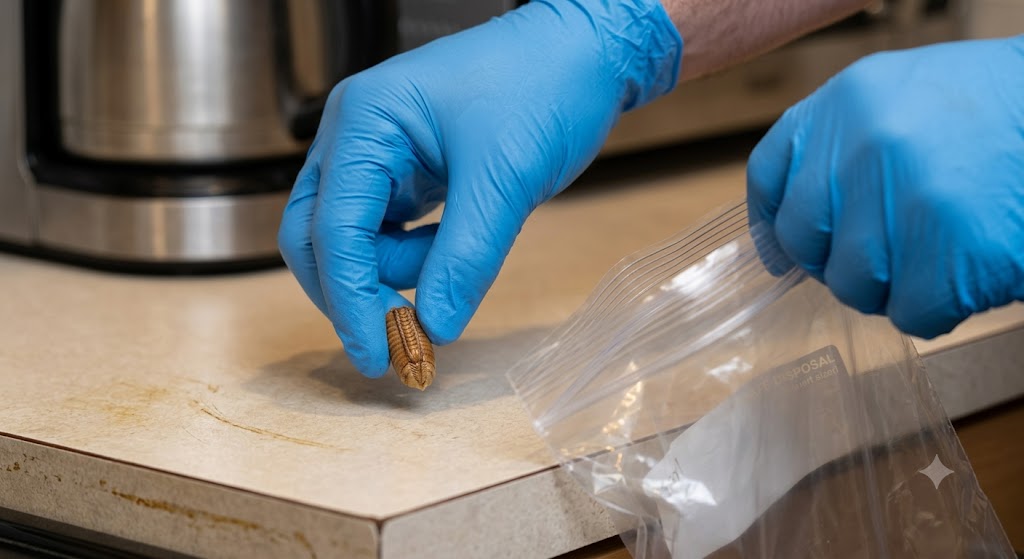
Removing the egg case you found: Don’t crush it — some species release eggs on impact. Instead, put on gloves, pick it up with a paper towel, place it in a small zip-lock bag, and either freeze it for 48 hours or seal it and dispose of it outside immediately. Flushing works as a last resort.
Diatomaceous earth (food-grade): Apply a thin layer along baseboards, under appliances, inside cabinet hinges, and in corners where cockroaches travel. It works by damaging their exoskeleton over time, causing dehydration. Food-grade diatomaceous earth is safe around pets and children once it has settled — keep pets out of the room during application until the dust settles.
IGR (Insect Growth Regulator) sprays: IGRs don’t kill cockroaches directly — they prevent nymphs from developing into reproductive adults, breaking the breeding cycle at the source. Applied as a spray in harborage zones, they’re one of the most effective tools for stopping an infestation from expanding. Generally low toxicity to mammals.
Boric acid: Highly effective when placed in the right locations — along the back of cabinet shelves, inside wall voids, and under appliances. Critical caveat: boric acid must be placed out of reach of pets and children. It is toxic if ingested in quantity. Use it only in areas your animals cannot access.
What to avoid: Broadcast aerosol sprays (the “bug bombs” and foggers) push cockroaches into new areas before killing them, often worsening the spread. They also leave residue on food surfaces. They’re one of the least effective tools against cockroaches and among the most disruptive.
Signs the Eggs Have Already Hatched
If you find an empty casing with small holes along the seam, the eggs have already hatched and nymphs are present. Here’s what to look for:
- Tiny cockroaches — nymphs are smaller versions of the adults, sometimes lighter in color, and move quickly
- “Coffee ground” droppings in kitchen drawers or along cabinet edges — nymph droppings are smaller and more granular than adult droppings
- A sudden increase in small roach sightings after you’ve started treatment — counterintuitively, this can mean treatment is working. Nymphs flee disturbed areas and become more visible before the population drops.
When to Call a Professional
DIY is effective for early-stage situations. Consider calling in professional help if:
- You find three or more egg cases in different parts of the home
- You’re finding new egg cases after two or more weeks of treatment
- You discover evidence inside kitchen appliances — the dishwasher motor cavity, refrigerator compressor area, or inside the stove’s insulation
- The infestation has spread to multiple rooms
A professional treatment can reach wall voids, apply gel baits directly into harborage zones, and use IGR products at concentrations not available over the counter.
FAQ
What do cockroach eggs look like to the naked eye?
Cockroach eggs are contained inside an ootheca — a small, ridged capsule ranging from 4–10mm depending on the species. German cockroach cases are tan to brown and about the size of a large bean. American cockroach cases are darker and slightly larger. You can see them without magnification, especially with a flashlight.
How many eggs are in a cockroach egg case?
Between 15 and 48 eggs depending on species. German cockroach cases hold 30–48; American cockroach cases hold about 16. One female German cockroach can produce 4–8 cases in her lifetime — meaning potentially 120–384 offspring from a single roach.
How do I get rid of cockroach eggs safely with pets in the house?
Remove the egg case manually (bag and freeze or seal and discard), then use food-grade diatomaceous earth in travel zones and IGR spray in harborage areas. Avoid boric acid in accessible areas and skip broadcast foggers entirely. [INTERNAL LINK: /find-an-exterminator “See when to call a professional”]
Can cockroach eggs survive pest control treatment?
The hardened ootheca offers some protection against surface sprays, which is why IGR products — which target the nymph stage — are more effective than trying to kill eggs directly. This is also why follow-up treatment is important: eggs that survive the first treatment will hatch into nymphs.
Return home
Filed under