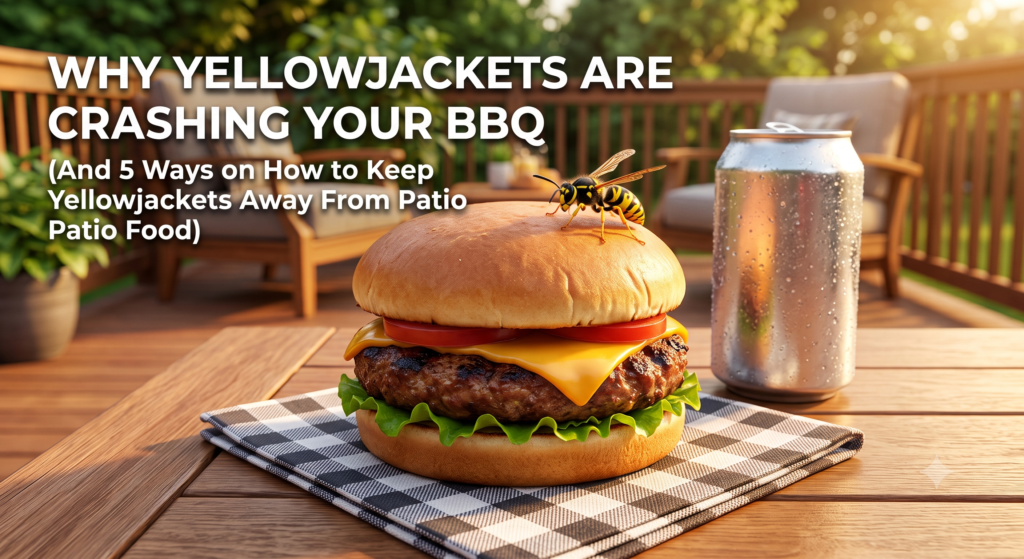
If you’ve tried to eat outside anytime recently, you’ve probably noticed uninvited guests hovering over your hamburger or landing on the rim of your drink (like the scene above). It feels like they are significantly more aggressive right now than they were just a month ago.
You aren’t imagining things. There is a biological reason why these stinging pests suddenly turn into relentless scavengers as the summer winds down.
During the spring and early summer, yellowjacket workers are focused on expanding their nests and hunting for protein (like other insects) to feed their growing larvae. But by August, their colonies have reached peak capacity—often containing thousands of workers (see Image 1 below). At the same time, their natural food sources start to dry up. The larvae no longer produce the sugary secretion the adult workers feed on, sending the hungry adults into a frantic, sugar-starved frenzy.
Why the Invasion is So Intense Right Now
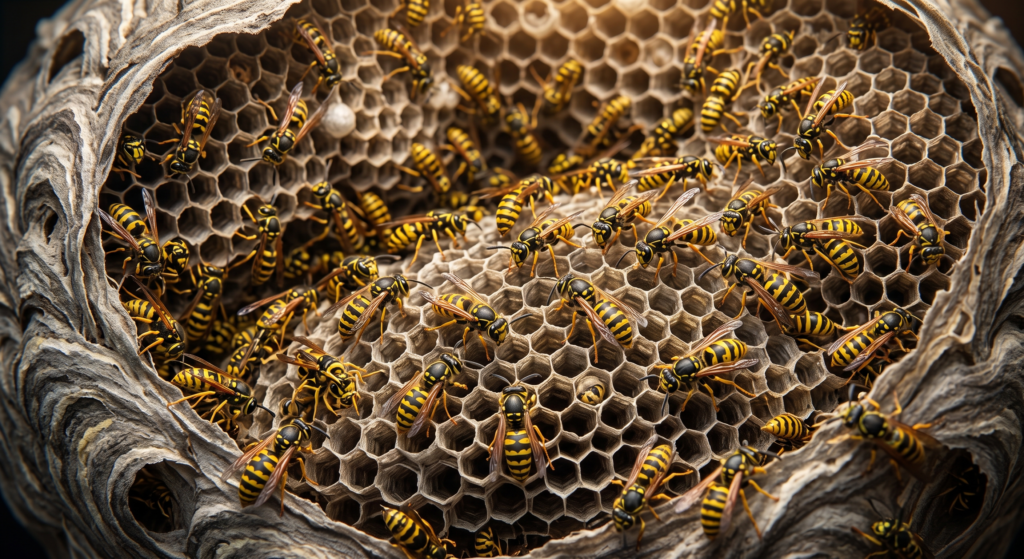
When you see one yellowjacket on your burger, remember this internal view. Their populations explode in late summer. They are hungry, they are desperate, and your backyard barbecue looks like an all-you-can-eat buffet.
When you’re dealing with a starving colony containing thousands of individuals, swatting them away is a losing battle (and one that can get you stung). If you want to enjoy the rest of the season outdoors, you need a proactive strategy.
5 Steps: How to Keep Yellowjackets Away From Patio Food
Here are 5 proven ways on how to keep yellowjackets away from patio food so you can eat in peace.
1. Serve and Clear with Military Precision
Yellowjackets are visual scavengers with an incredible sense of smell. Do not leave food sitting out before or after a meal. Keep everything covered indoors until the exact moment you are ready to eat. Once everyone is finished, immediately clear the plates and wipe down the table to remove any lingering grease or sugar residue.
2. Set Up a “Decoy” Buffet
This is highly effective. Give the wasps something better to do away from you. About 20 to 30 minutes before you plan to eat, place a small, highly appealing plate of food at the far edge of your yard (at least 20 feet from your patio). A slice of messy, overripe fruit (like a melon rind or banana peel) or a small piece of raw meat works perfectly. The visual foragers will find the decoy and direct the rest of the colony there, ignoring your table.
3. Rethink Your Drink Cups
Yellowjackets love sugary drinks, beer, and wine. They are notorious for crawling inside open aluminum cans or dark bottles where you can’t see them—leading to incredibly dangerous stings around the mouth. Always pour your drinks into clear glasses so you can see what is inside, or use cups with tight-fitting lids and straws.
4. Avoid Wearing Scents That Mimic Flowers
Since these pests are desperately searching for sweet nectar, wearing heavy, sweet, or floral perfumes, colognes, or even scented lotions can make you a target. When you’re eating outside in late summer, keep your personal fragrances as neutral as possible.
5. Keep a Lid on the Trash
Your outdoor garbage can is a goldmine for a starving yellowjacket colony. Make sure all of your outdoor bins have tight-fitting, sealable lids. If your bins are placed right next to your patio, move them to the opposite side of the house until the season changes.
When to Call the Professionals
While these DIY tips are highly effective for managing foraging yellowjackets during a meal, they won’t solve the root of the problem if there is a nest on your property.
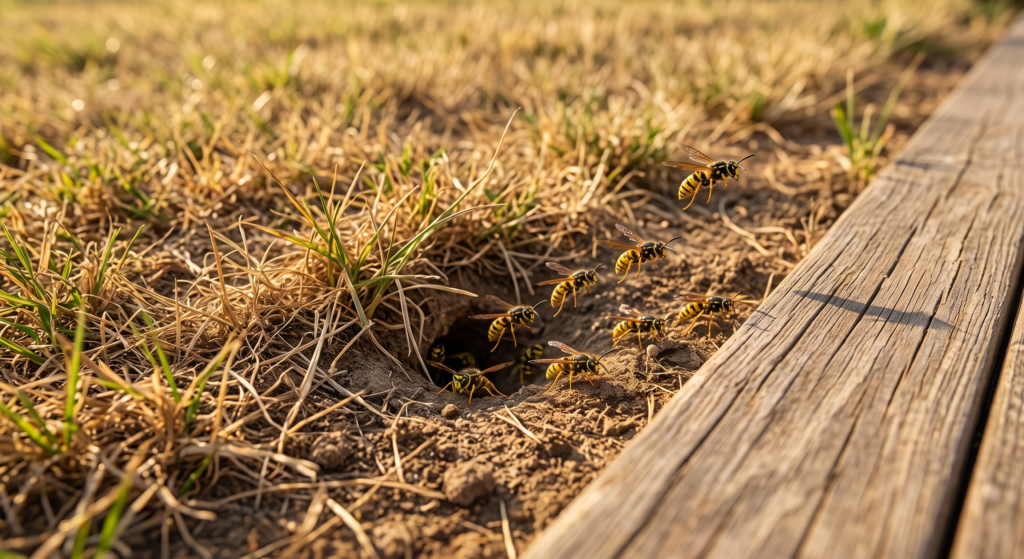
Yellowjackets are notoriously territorial and aggressive defenders of their homes. They often build their nests out of sight—inside wall voids, under eaves, or hidden underground in abandoned rodent burrows. If you step on a ground nest or get too close to an entrance, they will swarm and sting repeatedly.
If you notice a high volume of wasps constantly returning to a specific crack in your siding or a hole in your lawn, do not attempt to spray or seal it yourself.
Take back your yard before the season is over. Contact the expert team at nomorecritters today for a fast, safe, and professional inspection.
Filed under