Clothes moth damage is almost always discovered too late — a wool coat pulled out of storage with irregular holes along the seam, a cashmere sweater that wasn’t there when it went in. Prevention is simpler than treatment, and far less expensive than replacement. Here’s a complete system for keeping clothes moths out of your wardrobe before they ever get started.
Why are clothes moths getting into my wardrobe in the first place?
The webbing clothes moth (Tineola bisselliella) and casemaking clothes moth (Tinea pellionella) are drawn to three things: natural animal fibers, darkness, and stillness. Wool, cashmere, silk, fur, and feathers contain keratin — the protein their larvae use as primary food. Synthetics offer nothing to them.
A wool coat worn twice in winter and stored until next November is an ideal environment. Add body oils, perspiration residue, or food stains and the appeal increases. Clothes moths most commonly enter homes on second-hand clothing, vintage furniture or rugs, or items returned from storage elsewhere. Once inside they establish quietly before anyone notices.
How should I store wool and cashmere to prevent moth damage?
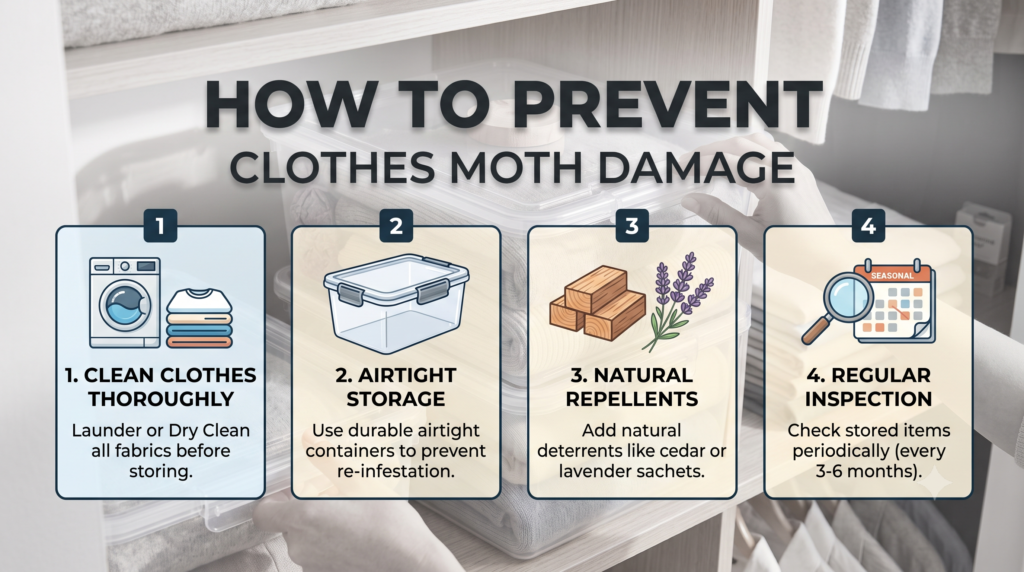
Always clean before storing — this is the rule that matters most. Moths are drawn to body oils and perspiration on fabric, even amounts invisible to the eye. A garment that looks clean but wasn’t freshly laundered before storage is far more attractive to a female moth than a freshly cleaned one.
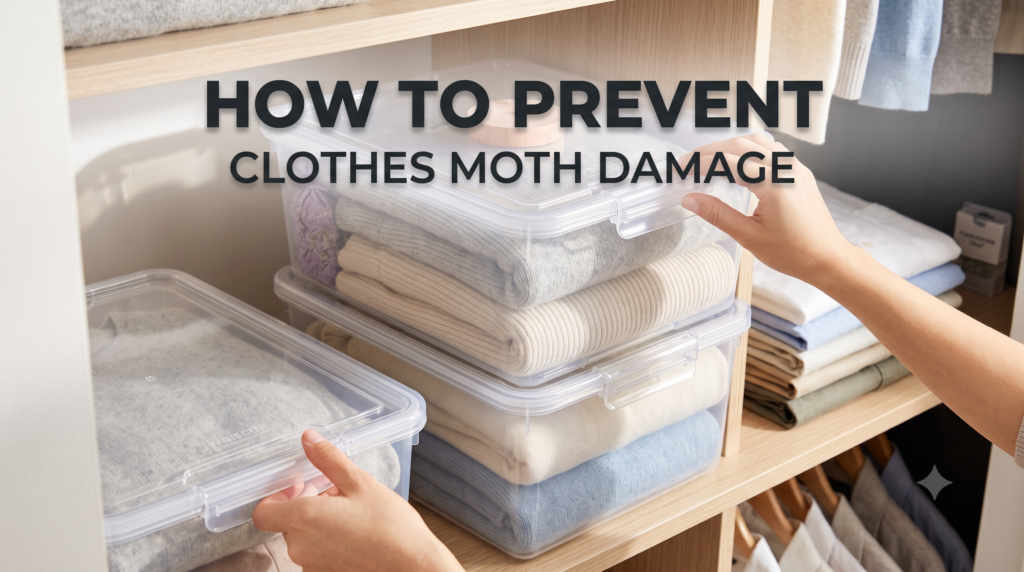
Use airtight hard plastic containers. Clothes moths can chew through soft plastic — vacuum seal bags are less reliable than they appear. Hard-sided containers with tight-fitting lids are the most reliable physical barrier. For hanging items, cedar-lined or high-quality zippered garment bags designed for long-term storage work well.
Avoid cardboard boxes — porous, easy to enter through seams, absorbs moisture. Don’t pack too tightly — compressed garments create exactly the dark, undisturbed pockets moths prefer. Store in cool, dry conditions — attics in summer can become ideal breeding environments. A climate-stable interior closet is a better choice.
Do cedar and lavender actually keep clothes moths away?
Partially — but far less reliably than most people assume.
Fresh cedar contains natural oils that repel adult moths. The problem is those oils dissipate within months unless cedar blocks are regularly sanded to release fresh oil. Old, dry cedar does essentially nothing. Lavender works on the same principle with weaker evidence and the same dissipation problem.
The critical limitation of both: they deter adults, not larvae. If eggs were already laid in a garment before storage, cedar and lavender won’t kill what hatches. They’re a supplementary layer, not a foundation. Airtight storage and cleaning before storage are the reliable core.
Mothballs are more effective at killing all life stages but the gas is toxic in enclosed spaces near people and pets, and the smell binds permanently to fabric. For most households the trade-off isn’t worth it.
How do pheromone traps prevent clothes moths?
Pheromone traps attract and catch adult male moths on a sticky surface, disrupting the breeding cycle. More importantly they function as an early warning system — a trap catching zero moths tells you the area is currently clear. A trap suddenly catching moths tells you adults are present before any visible damage appears.
Place traps in every closet and storage area containing natural fibers. Check monthly. Replace every three months. This single habit turns an invisible pest into something trackable.
How do I protect wool rugs and carpets from clothes moths?
Vacuum regularly, specifically targeting edges and the sections under heavy furniture — the zones that don’t receive foot traffic or cleaning. Move heavy furniture two to four times a year, vacuum the exposed rug, and inspect the pile for any thinning. Air rugs outdoors seasonally — hanging, beating, and sunlight exposure disrupts larvae and eggs effectively. A permethrin-based spray along skirting boards and carpet edges every few months adds a residual protective barrier.
What should I do when I bring second-hand or vintage clothing home?
Treat every second-hand natural fiber item as a potential carrier. Hot wash above 120°F immediately for machine-washable items. For wool, cashmere, or silk — dry clean, or seal in a bag and freeze at 0°F for two weeks minimum before introducing to your wardrobe. Same applies to vintage rugs and upholstered furniture.
How often should I check for clothes moths?
Build two inspection points into the year: spring and autumn wardrobe rotation. Inspect each piece, check pheromone traps, vacuum storage areas, and refresh cedar. Between those points, check traps monthly. And don’t leave natural fiber garments untouched for months at a time — simply handling, shaking out, or briefly airing a stored piece disrupts larvae and exposes the item to light. Stillness is what clothes moths depend on. Regular disturbance is a simple, free deterrent.
When does prevention become treatment?
Pheromone traps catching moths consistently, or any silken webbing, frass, or larvae during inspection, means prevention has shifted into treatment. The earlier it’s caught the easier the response.
If it’s already spread beyond one closet or valuable items are at risk — a pest professional can assess and treat more comprehensively than is practical at home.
Filed under