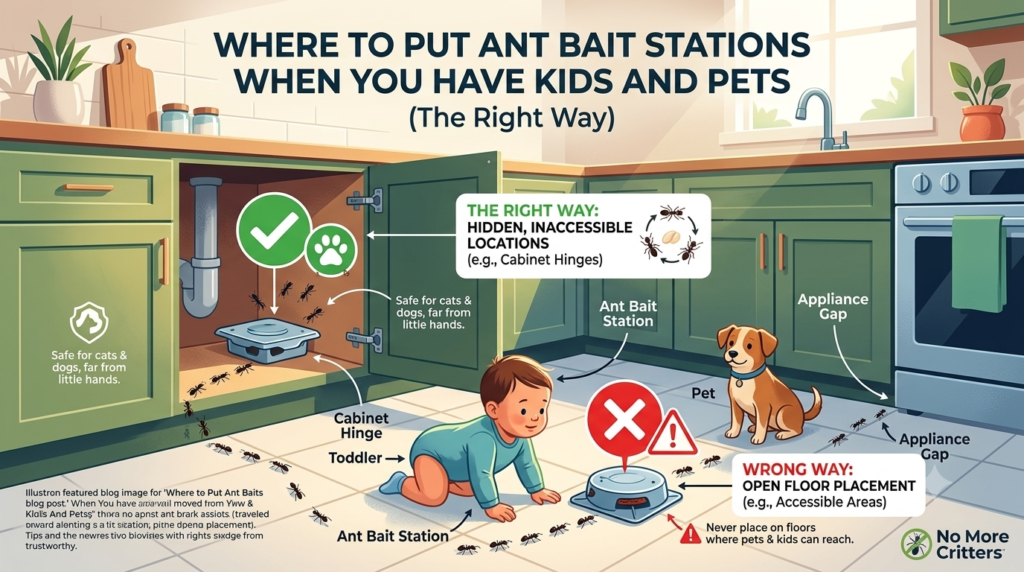
The instructions on ant bait packaging say to place near ant activity. What they don’t tell you is where specifically — and for households with dogs, cats, or toddlers, that missing detail matters a lot.
Ant bait stations are actually one of the safest pest control options available for homes with children and pets. But placed incorrectly, they become a hazard instead of a solution. Here’s exactly where to put them, where to avoid, and what to know about the active ingredients before you open the package.
Are Ant Bait Stations Safe for Pets and Kids?
Ant bait stations are significantly safer than spray insecticides when placed correctly — but the active ingredient matters, and placement is everything.
Most consumer ant bait stations use one of two active ingredients:
Borax (sodium tetraborate) — used in products like TERRO. Borax is a naturally occurring mineral salt with low acute toxicity. A dog or cat that licks a bait station is unlikely to be harmed by the small amount present in a single station. However, ingesting multiple stations or the raw bait repeatedly could cause gastrointestinal upset. The risk is low but not zero.
Indoxacarb — used in some gel baits. Also low toxicity to mammals at the concentrations used in consumer products. Works by disrupting the nervous system of insects specifically.
Neither ingredient is acutely dangerous in the quantities present in a single bait station. The real risk is not the toxicity level — it’s a pet or child repeatedly accessing bait and consuming large amounts over time. This is why placement is the actual safety variable.
Where to Place Ant Bait Stations Safely
The goal is to put bait where ants travel and where pets and children physically cannot reach or are extremely unlikely to go.
Best locations:
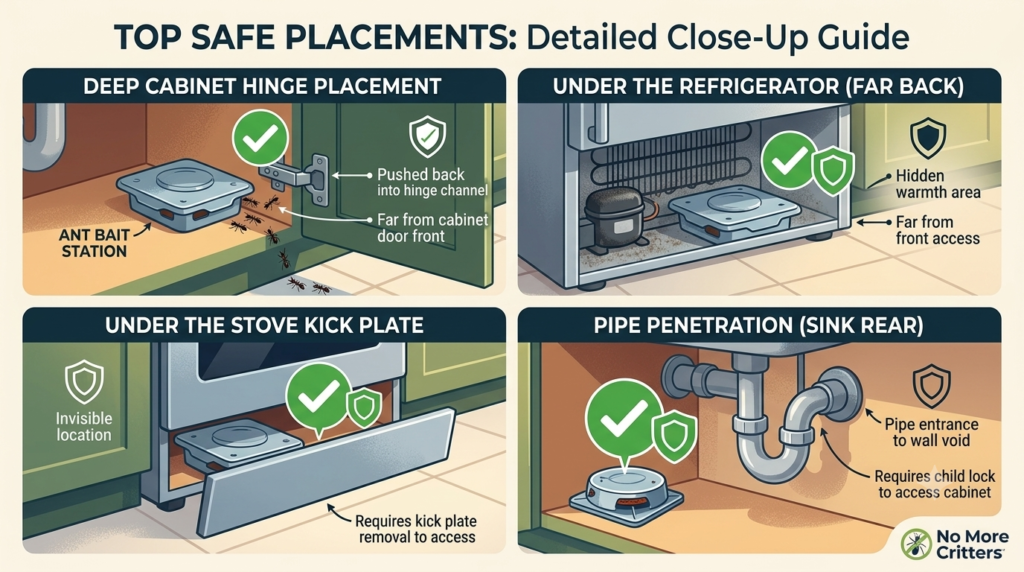
Inside cabinet hinges — the small gap at the back of a cabinet hinge is large enough for ants and completely inaccessible to pets and toddlers. This is the single best placement in a kitchen.
Under the refrigerator — push stations as far back as possible along the motor housing at the rear. Ants love the warmth. Pets and children rarely reach this far under appliances.
Under the stove kick plate — the thin gap at the bottom front of most stoves. Slide stations in along the side walls where they won’t be visible or accessible.
Inside the cabinet under the sink — position against the back wall near pipe penetrations, not near the front where a child might reach. Add a child safety lock to this cabinet if you don’t already have one.
Behind the toilet — for bathroom ant trails, the gap between the toilet base and the wall is effective and inaccessible to most pets.
Behind large appliances — washing machines, dishwashers, and dryers create warm zones that attract ants. Stations placed behind these are effectively hidden from pets and children.
Where Not to Place Ant Bait Stations
Open floor surfaces — a bait station sitting on the kitchen floor is accessible to every dog, cat, and crawling toddler in the house. Never place on open floors.
Pet food areas — ants are attracted to pet food, so it feels logical to put bait nearby. But this is exactly where pets spend time. Place bait at the harborage source, not the food source.
Low open shelving — easily accessible to children and curious pets. Always place inside enclosed spaces.
Near HVAC vents — airflow disperses the attractant and reduces effectiveness.
The Biggest Mistake People Make With Ant Bait
Spraying any cleaner, vinegar, or insecticide near bait placements.
Ants find bait by following their pheromone trails. If you spray a surface cleaner, vinegar, or insecticide on or near the trail, you eliminate the path that leads ants to the bait. The bait sits untouched and appears not to work.
The correct sequence: place bait first, then clean other surfaces away from the bait area. Leave the trail near bait placements completely undisturbed. The ant activity around bait may actually increase for 24-48 hours before it decreases — this is the bait working, not failing.
What to Do If a Pet Gets Into a Bait Station
If a dog or cat chews open and consumes a single standard ant bait station, monitor for signs of gastrointestinal upset — vomiting, lethargy, or loss of appetite. Contact your veterinarian if symptoms appear. For most pets and most products, a single station ingested is unlikely to cause serious harm, but your vet should make that assessment based on your pet’s size and the specific product.
Keep packaging so you can tell your vet the exact active ingredient and concentration.
For more on identifying ant species and choosing the right treatment, see our complete ant guide.
When to Call a Professional
If you’ve placed bait correctly, left it undisturbed, and still have active trails after two weeks, the nest location may require professional access. A pest control professional can locate indoor nests and apply treatments in wall voids and under flooring that consumer bait can’t reach.
We can match you with vetted local exterminators — no spam, no pressure.
No More Critters provides vetted pest identification and treatment information for homeowners. This site is a free service to assist homeowners in connecting with local service providers. All contractors and providers are independent. This site does not warrant or guarantee any work performed.
Filed under