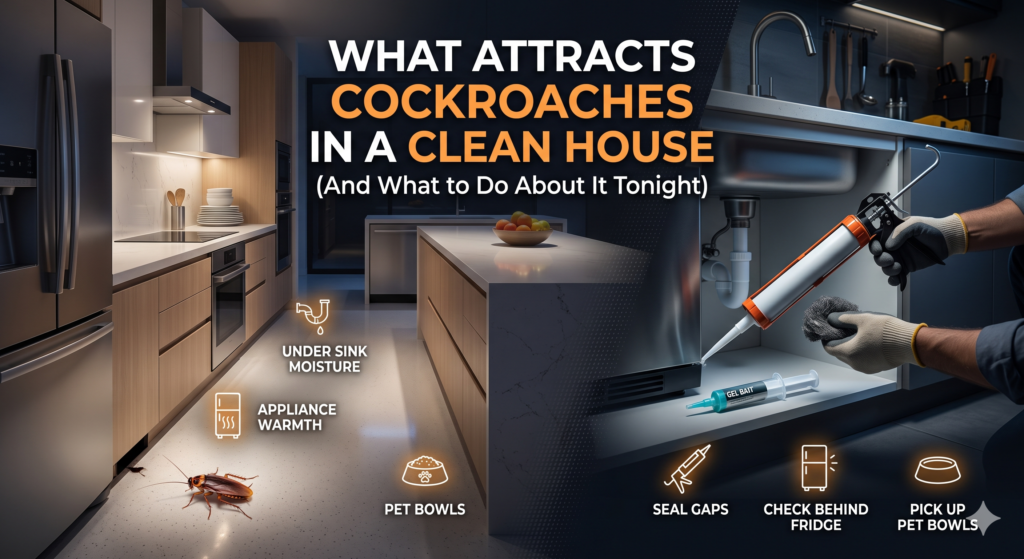
What Attracts Cockroaches in a Clean House (And What to Do About It Tonight)
You wiped the counters. You took out the trash. You haven’t left a dish in the sink in weeks. And yet — there it is. Scuttling across the kitchen floor at 2am like it owns the place.
Finding cockroaches in a clean house isn’t a personal failure. It’s actually one of the most common pest complaints in North America, and it has nothing to do with how tidy you are. Here is exactly what attracts cockroaches in a clean house, and what you can do about it right now.
The Biggest Myth in Pest Control
Cockroaches are not a sign of a dirty home. That association is decades old and mostly wrong.
Roaches need three things to survive: warmth, water, and shelter. Food is almost secondary — German cockroaches can survive for a month without eating. What they cannot live without is water, and they’ll find it in ways that have nothing to do with how often you mop.
6 Things That Attract Cockroaches to Clean Kitchens & Homes
1. Moisture You Don’t Know About
A slow drip under the kitchen sink. Condensation collecting behind the refrigerator. A slightly damp basement wall. Any of these is enough.
Cockroaches can detect moisture with remarkable precision. They’re not wandering randomly — they’re following a scent trail directly to your plumbing. Check under every sink in the house, behind appliances, and around the water heater. Fix even the smallest leaks.
2. Entry Points You’ve Never Noticed
Cockroaches can compress their bodies to fit through gaps as thin as a quarter. That gap under your front door, the space around the dryer vent, the crack where the pipes enter the wall under your sink — all of these are open doors.
In summer, cockroaches are far more active outdoors and far more likely to wander inside through gaps they’d ignore in winter. The heat accelerates their breeding cycle and pushes them to explore new territory.
3. Your Grocery Bags and Cardboard Boxes
This one surprises most homeowners. Cockroaches—especially the notorious German cockroach—are expert hitchhikers. They frequently glue their protective egg capsules (known as oothecae) deep inside the corrugation of cardboard boxes, where they are almost impossible to spot. They also hide in the folds of paper grocery bags and hitch rides in secondhand furniture or used appliances.
If you’ve recently moved, unboxed a major online delivery, or brought home a thrift store find, you may have unknowingly introduced these hidden infestation signs straight into your living space.
4. Pet Food and Water Bowls
A bowl of dry kibble left out overnight is a buffet. A water bowl sitting on the floor is a watering hole. Even if your own food is sealed and put away, pet dishes left out around the clock give cockroaches exactly what they need.
Fill pet water bowls fresh each morning and pick up food dishes at night. It’s a small habit that makes a real difference.
5. Warmth from Appliances
The back of a refrigerator generates consistent heat. So does the underside of a dishwasher, the motor housing of a stove, and the space behind a microwave. Cockroaches are drawn to these warm, dark, undisturbed zones — not because there’s food, but because the temperature is stable.
In clean homes, this is one of the most common hiding spots pest professionals find infestations in.
6. Neighbors (Especially in Apartments)
If you live in a multi-unit building, your neighbors’ pest situation directly affects yours. When a neighboring unit is treated, cockroaches don’t disappear — they migrate through shared walls, pipes, and vents looking for a new harborage.
This is one of the most frustrating patterns in apartment pest control, and it’s entirely outside your control. It’s also one of the strongest arguments for professional treatment rather than DIY.
Why Summer Makes It Worse
Cockroach activity peaks in summer for a straightforward reason: heat accelerates everything. Their reproductive cycle shortens, their movement range expands, and their need for water increases. A population that stayed manageable through spring can explode between June and August.
If you’re seeing cockroaches for the first time this summer and your home hasn’t changed, the season itself may be the trigger.
What to Do Right Now
Tonight:
- Pull the refrigerator away from the wall and check behind the motor. Clean any grease buildup you find.
- Check under every sink for moisture or droppings.
- Pick up pet food bowls and empty any standing water.
This week:
- Seal gaps around pipes under sinks with steel wool and caulk.
- Install door sweeps on any exterior doors with visible gaps.
- Switch from paper grocery bags to reusable bags, and break down and discard cardboard boxes immediately.
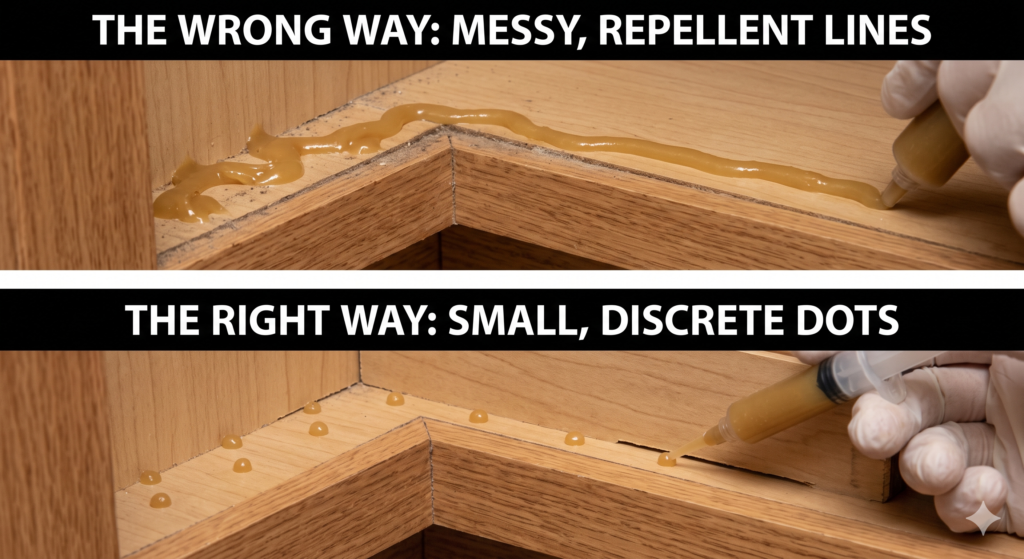
For an active infestation: Gel bait is the most effective consumer-grade treatment available. Apply small dots near harborage areas — under the refrigerator motor, inside cabinet hinges, behind the stove. Do not use sprays in combination with bait. Sprays repel cockroaches away from the bait and make the treatment useless.
For more on identification and treatment, see our full cockroach guide.
When to Call a Professional
If you’ve seen more than one cockroach, or you’ve seen them during the day, the infestation is likely already established beyond what gel bait alone can handle. Cockroaches are nocturnal. Daytime sightings mean the population is large enough that the hiding spots are getting crowded.
A professional can locate harborage areas you can’t access, apply treatments that penetrate wall voids and appliance motors, and set up monitoring to confirm elimination.
If you’re ready to bring in a pro, we can match you with vetted local exterminators.
No More Critters provides vetted pest identification and treatment information for homeowners. This site is a free service to assist homeowners in connecting with local service providers. All contractors and providers are independent. This site does not warrant or guarantee any work performed.
More guides like this
Tiny Bugs in Your Pantry Grains? How to Identify Weevils (And Where They Actually Come From)
8 min read
What Do Cockroach Eggs Look Like? Species-by-Species ID Guide — Plus What to Do If You Find One
7 min read
How to Get Rid of a Wasp Nest Without Getting Stung (And When Not to Try)
6 min read