
Mice In The Walls At Night?
You’re lying in bed. The house is quiet. And then — there it is. A faint scratching, skittering, or rustling sound coming from inside the wall.
If you’re hearing mice in walls at night, you’re not alone, and you’re not imagining it. The good news: this is one of the more manageable pest situations a homeowner can face, especially when caught early. Here’s how to figure out exactly what you’re dealing with — and what to do about it tonight.
What’s Making That Scratching Sound in Your Walls?

Not every scratching sound in walls at night means mice. Before you set a single trap, it helps to know what you’re actually dealing with.
Mice move fast and light. You’ll hear rapid, soft scurrying — almost like someone tapping their fingers quickly on a hard surface. They’re most active between 11pm and 5am, and the sounds tend to come from lower in the wall, near baseboards or floor level.
Rats are heavier. Their sounds are slower, with more dragging and occasional gnawing or grinding. If the sound feels bigger than a mouse, it probably is.
Squirrels are almost always active during the day. If the sound is concentrated in the attic or ceiling and happening in the morning or afternoon, squirrels are the more likely culprit.
Raccoons make a lot of noise — rolling, thumping, and shuffling. If it wakes you up from across the room, it’s not mice.
Pipes can produce rhythmic ticking or banging sounds, usually tied to when your heat kicks on or water runs. If the sound follows a predictable pattern and stops when activity in the house stops, it’s probably not an animal at all.
If what you’re hearing is light, fast, and happening in the middle of the night — mice scratching in walls is the most likely explanation.
Other Signs That Confirm It’s Mice
Sound alone isn’t always enough. Look for these supporting signs before you decide on a plan:
- Droppings: Small, dark, rod-shaped, about the size of a grain of rice. Check along baseboards, behind appliances, and inside kitchen cabinets.
- Gnaw marks: Look at the corners of food packaging, baseboards, and any soft wood near floor level. Fresh gnaw marks are lighter in color; old ones darken over time.
- Grease smears: Mice run the same routes repeatedly and leave a greasy residue along the edges of walls and baseboards. Look for faint gray smears at floor level.
- Pet behavior changes: Cats and dogs often know before you do. If your pet is suddenly fixated on a specific section of wall, sniffing intensely or pawing at the baseboard, trust that instinct.
Finding two or more of these signs alongside the sounds is a strong confirmation. One sign alone — especially droppings — is usually enough to act.
How Serious Is This, Really?
Mice in walls at night are alarming to discover, but they’re worth keeping in perspective.
The biggest genuine risk is gnawed electrical wiring. Mice chew constantly — it’s a biological need — and wiring inside walls is not off-limits. A small percentage of house fires are attributed to rodent damage to wiring, so this isn’t something to ignore indefinitely. The longer an infestation goes untreated, the higher that risk climbs.
Mice can also carry bacteria (including salmonella) that contaminate food surfaces. Droppings in kitchen drawers or on countertops are a real hygiene concern.
Hantavirus gets mentioned a lot, and the fear is understandable — but the risk is specific. It’s primarily associated with deer mice in rural areas, not the common house mouse most urban and suburban homeowners encounter. It’s not a reason to panic, but it is a reason to wear gloves and a mask when cleaning up droppings.
Bottom line: this is worth addressing promptly, but it’s not an emergency that requires you to leave your home tonight.
What to Do Tonight — How to Get Rid of Mice in Walls
The wall itself isn’t where you treat — it’s where they travel. You treat at both ends: where they’re getting in, and where they’re feeding.
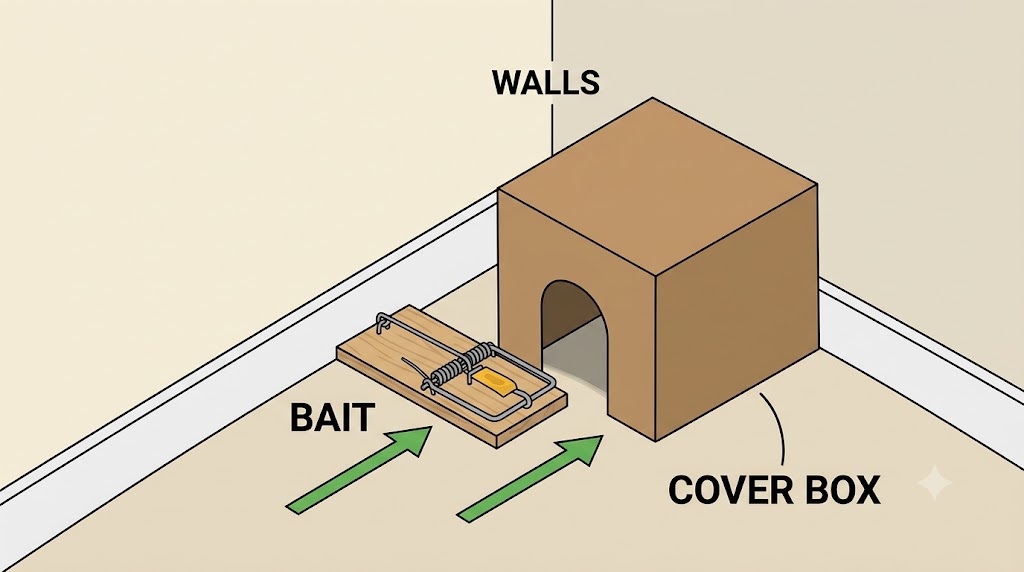
Step 1: Set snap traps along the walls. Snap traps remain the most effective, humane, and fast-acting option available to homeowners. Place them perpendicular to the wall (not parallel) with the bait end touching the baseboard — mice run along walls, not across open floor. Use a small amount of peanut butter as bait. Check traps every 24 hours.
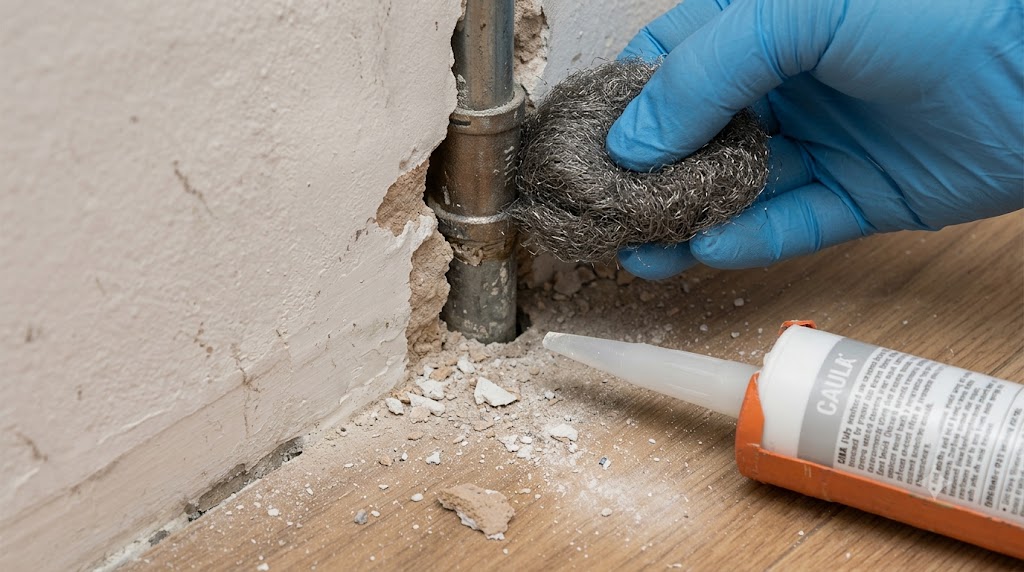
Step 2: Seal every entry point you can find. Mice can squeeze through a gap the size of a dime. Walk your home’s perimeter and look for cracks around pipes, gaps under doors, and spaces around utility lines. Stuff these openings with steel wool, then seal over the top with caulk. Mice cannot chew through steel wool.
Step 3: Remove food access overnight. Transfer dry goods — cereal, rice, pet food, crackers — into hard plastic containers with locking lids. Remove pet food bowls at night rather than leaving them out. This cuts off the food source mice are traveling through your walls to reach. → [AFFILIATE LINK PLACEHOLDER: Airtight food storage containers, ~$15–25 for a set]
Pet-Safe Options — and What to Avoid
If you have dogs or cats, the trap placement matters as much as the trap type.
Snap traps are actually your safest option with pets, when placed correctly. Position them inside a small cardboard box with a hole cut in the side just large enough for a mouse — this keeps curious paws and noses away from the trap while still allowing mice to enter freely. Place them in areas your pets can’t easily access: inside cabinets, behind appliances, along walls in closed-off rooms.
Avoid rodenticide (poison bait) entirely if you have pets or small children. Rodenticides are highly effective at killing mice, but secondary poisoning — a pet eating a poisoned mouse — is a documented and serious risk. The damage to your pet’s system can happen days after exposure, making the connection easy to miss.
Live-catch (no-kill) traps are an option if snap traps feel uncomfortable. Be aware: they require checking every 12–24 hours (a trapped mouse can die of stress quickly), and you need to release the mouse at least a quarter mile from your home or it will find its way back.
Glue traps: skip them. Most pest control professionals don’t recommend them — they cause prolonged suffering, trap non-target animals (including lizards and birds), and don’t address the root problem.
When to Call a Professional
DIY works well for small, early-stage mouse situations. Here’s when the math changes:
- You’re finding droppings in more than one room
- You’ve been trapping for a week and still catching mice consistently (or not catching any despite ongoing sounds)
- You hear activity in the ceiling or attic, not just the walls — this often means a larger entry point or nesting site that’s hard to reach without professional equipment
- You find evidence of gnawing near electrical outlets or junction boxes
At that threshold, a pest control professional can locate entry points you’ve missed, set bait stations in wall voids, and give you a realistic timeline for resolution.
FAQ
Why do mice come out at night?
Mice are nocturnal by nature — they’ve evolved to be active when predators are less likely to be moving around. Your quiet house at 2am is exactly when they feel safest traveling through your walls to find food.
Can mice in the walls come out into my living space?
Yes. Walls are travel corridors, not nesting spots. Mice use wall cavities to move between their outdoor entry point and indoor food sources. They will and do enter living spaces, especially kitchens.
How long does it take to get rid of mice in walls?
A small, early infestation addressed promptly — traps set, entry points sealed, food secured — can be resolved in one to two weeks. Larger or longer-standing infestations take longer, and professional help is often the faster route.
Is one mouse in the house a big deal?
One mouse is a signal, not a crisis. Mice don’t usually travel solo for long — where there’s one, others are likely nearby or incoming. Treat promptly rather than waiting to “see if it was just one.”
What scents keep mice away?
Peppermint oil, cayenne, and similar home remedies are widely shared online but have limited, short-term effectiveness at best. Sealing entry points and removing food sources is the only approach with a lasting track record.