Clothes moths are a uniquely insidious household pest because the damage is done in the dark, in silence, and almost always before you realize anything is wrong. By the time you find the hole in your wool sweater or the bare patch in your oriental rug, the larvae responsible have already moved on. Understanding their life cycle is the only thing that puts you ahead of them.
1. Identification: What Is Actually Destroying Your Wardrobe?
There are two species responsible for virtually all residential textile damage: the Webbing Clothes Moth (Tineola bisselliella) and the Casemaking Clothes Moth (Tinea pellionella). Both are far smaller and more secretive than the large moths drawn to outdoor lights at night — they are not the same insect.
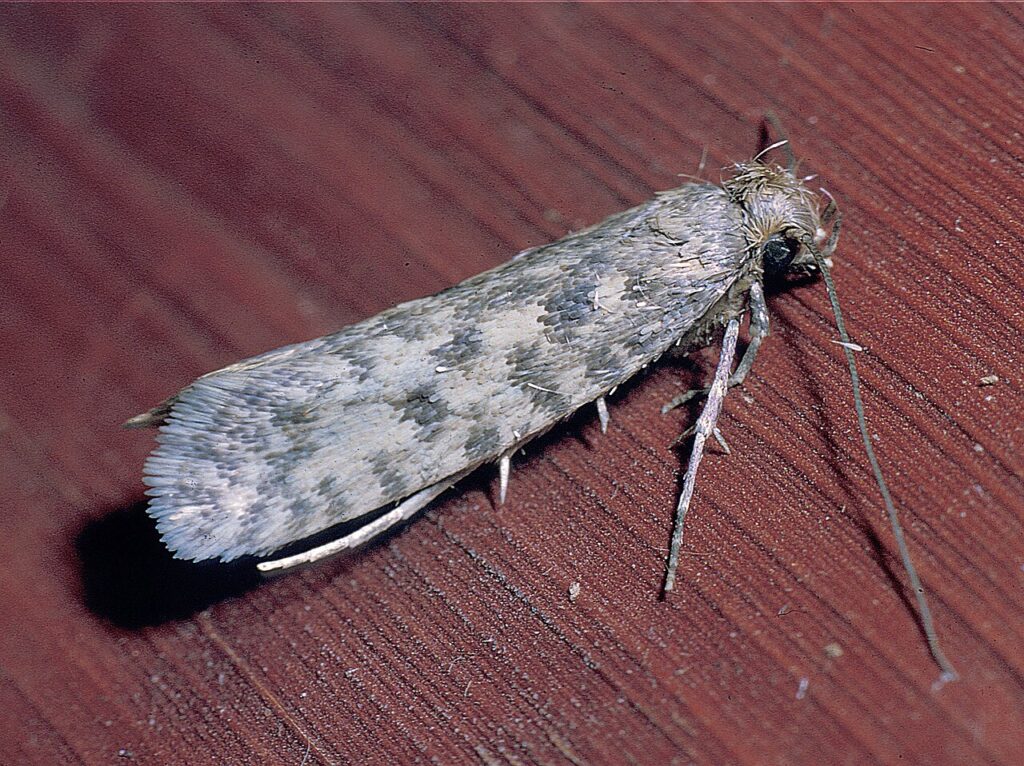
Physical Appearance: Adult webbing clothes moths are 6–8mm in length with a wingspan of roughly 14–18mm. They are a uniform golden or buff yellow, occasionally with a faint coppery sheen. Their heads are tufted with reddish-golden hairs that give them a slightly disheveled appearance up close. Casemaking clothes moths are similar in size but carry small dark spots on their wings.
The Critical Distinction: The adults do not eat. They do not damage fabric. The larvae do. Adult clothes moths are weak fliers that actively avoid light — if you see a small golden moth skittering along a baseboard or fluttering near the back of a closet rather than toward a window, that behavior alone identifies it. Moths drawn to light are almost certainly outdoor species.
What the Larvae Look Like: Clothes moth larvae are tiny, creamy-white caterpillars with a brown head capsule. Webbing clothes moth larvae spin a loose, irregular silk webbing across the surface of fabric as they feed. Casemaking moth larvae construct a portable silken tube or case they carry with them and retreat into when disturbed — if you find a small silken case roughly 10mm long clinging to a fabric surface, the larva may still be inside.
Signs of Infestation: Irregular holes in natural fiber garments, especially in areas of hidden compression (armpits, folds, beneath collars). Loose silken webbing across fabric surfaces. Sand-like frass (fecal pellets) in the folds of stored clothing. Bare patches or tracking lines in wool rugs, particularly beneath furniture legs where the pile is pressed flat and undisturbed.
2. Why They Enter & What Keeps Them There
Clothes moths do not wander in from the garden seeking warmth. They come in on infested items, and they stay because your home offers the precise conditions their larvae need to survive.
How They Enter: The most common introduction route is secondhand clothing, vintage furniture with upholstered fabric, antique rugs, or wool items stored in a previous home that carried eggs or larvae before you brought them inside. They also arrive on new items that passed through infested storage or warehouse environments.
What Keeps Them: Clothes moth larvae require keratin — the structural protein found in animal fibers. Wool, cashmere, mohair, alpaca, silk, feathers, and fur are their primary targets. Synthetic fabrics are not eaten unless blended with natural fibers or heavily soiled with sweat, food residue, or skin oils, which provide the protein content larvae need to develop. They stay because most homes contain undisturbed animal fiber items stored in exactly the dark, static conditions that allow eggs to hatch and larvae to feed without interruption.
The Inactivity Factor: Clothes moths specifically target items that are stored and untouched for extended periods. A wool coat worn and aired regularly is at significantly lower risk than one folded and sealed in a box at the back of a closet through an entire winter. Darkness, warmth, and stillness are the conditions they seek.
3. Potential Harm & Damage
Clothes moths pose no direct threat to human health. They do not bite, sting, or transmit disease. Their damage is entirely economic and deeply personal — because the items they destroy are frequently irreplaceable.
Textile Destruction: A single larva feeding over its development period of approximately 2–3 months under warm conditions can consume a significant section of fabric. A moderate infestation moving unchecked through a storage wardrobe can destroy multiple garments before a single adult moth is observed. The larvae feed preferentially on the underside of fabric, beneath furniture, and in compressed folds — damage is often invisible until a garment is shaken out or examined in direct light.
High-Value Targets: Clothes moths show a consistent preference for the most expensive items in a home. Vintage and heirloom textiles, hand-knotted wool rugs, cashmere knitwear, taxidermy, upholstered antique furniture with horsehair or wool padding, and feather-filled cushions are all primary targets. Museum collections cite clothes moths as among their most persistent preservation threats for exactly this reason.
The Irreplaceability Problem: A weevil infestation destroys a bag of rice. That can be replaced for eight dollars. A clothes moth infestation working through a grandmother’s handwoven blanket, a vintage wool suit, or a hand-knotted Persian rug represents a loss that money does not fully address. This is what separates clothes moths from most other household pests in terms of the emotional weight of an infestation.
3.5 When to Bypass DIY and Call a Professional
Small, localized clothes moth problems can be resolved through diligent sanitation, heat treatment, and targeted trapping. A professional becomes necessary in specific circumstances.
3 Signs It’s Time to Call an Exterminator
Damage Appearing in Multiple Rooms: If you are finding evidence of feeding across several rooms simultaneously — closets, rugs, upholstered furniture, a piano with felt hammer pads — the infestation has spread beyond what targeted DIY can effectively contain.
Infestation Inside Structural Elements: Clothes moth larvae can establish in the wool or horsehair padding inside antique upholstered furniture, beneath wall-to-wall wool carpet tacked to the floor, or inside a piano’s felt interior. These are breeding reservoirs a household owner cannot reach without professional intervention or specialized heat treatment equipment.
Recurring Infestations After Full Treatment: If you have followed a complete treatment protocol, discarded damaged items, and deep-cleaned your storage areas, yet damage continues to appear in subsequent seasons, there is a hidden breeding population in a location you have not identified. A professional inspection will locate it.
4. Prevention: How to Keep Them Out
Clothes moth prevention depends on denying larvae the three things they need: darkness, stillness, and undisturbed access to animal fiber.
Incoming Item Quarantine
Treat Before You Store: Any secondhand wool, silk, or animal fiber item — clothing, rugs, upholstered pieces — should be treated before it enters your main storage areas. The most reliable non-chemical method is heat: placing the item in a dryer on high heat for 30 minutes kills all life stages. For items that cannot tolerate heat, a minimum of 72 hours in a chest freezer achieves the same result. Do not skip this step with vintage or antique acquisitions.
Dry Cleaning Incoming Heirlooms: Wool items received from another home — an inheritance, a gift, an item retrieved from a family storage unit — should go directly to the dry cleaner before being integrated into your wardrobe. Dry cleaning kills all life stages reliably.
Storage Practices
Airtight Compression Bags: Seasonal wool and cashmere items should be stored in vacuum-seal compression bags between wearings. Clothes moths cannot chew through heavy-gauge plastic, and the airtight seal denies them access entirely. Ensure items are clean before sealing — food residue and body oils inside a sealed bag still provide larval nutrition.
Cedar: Cedar wood contains natural oils (thujaplicins) that repel adult clothes moths and deter egg-laying. Cedar blocks, hangers, and drawer liners are effective when the wood is fresh and fragrant. Sand the surface lightly each season to release fresh oil — once the scent fades, the deterrent effect fades with it.
Lavender: Dried lavender sachets and lavender essential oil on cotton pads placed inside storage areas act as a secondary botanical deterrent. Replace or refresh every three to four months.
Regular Disturbance: Remove stored wool items from closets and drawers at least once per season, shake them out in direct light, air them, and inspect the folds. Clothes moths cannot establish in items that are regularly disturbed and examined.
Rug Care: Vacuum wool rugs on both sides regularly, paying particular attention to the areas beneath furniture legs. Move furniture periodically to expose the compressed pile beneath. For valuable hand-knotted rugs, professional cleaning once per year is a meaningful preventive investment.
5. Control & Eradication Methods
Once a clothes moth infestation is confirmed, control requires attacking all life stages simultaneously — eggs, larvae, pupae, and adults — across every affected area.
Treatment Protocols
Remove and Sort All Affected Items (Step 1: The Assessment): Empty every closet, drawer, and storage container in affected areas. Examine every item in direct light. Separate items into three categories: visibly damaged or infested (treat or discard), potentially exposed (treat before returning), and unaffected items stored separately from animal fibers (set aside). Do not return any item to storage until it has been treated.
Heat or Cold Treatment (Step 2: Kill All Life Stages): For washable items, machine wash in hot water above 48°C followed by a full dryer cycle on high heat. For dry-clean-only items, the freezer method (72 hours minimum at -18°C or below) is the safest home option. For large rugs and upholstered furniture, professional heat treatment chambers or steam cleaning with sustained high-temperature contact are the most effective options.
Deep Vacuum of the Storage Environment (Step 3: Clear the Space): Vacuum every surface of the now-emptied closet, wardrobe, or storage area — shelves, corners, baseboards, floor seams, and particularly any cracks in wood where pupae may be lodged. Remove the vacuum bag or canister contents immediately to an outdoor bin.
Pheromone Traps (Step 4: Monitor and Intercept Adults): Clothes moth pheromone traps use a synthetic female sex pheromone to attract and capture adult males, interrupting the breeding cycle and dramatically reducing the next generation of egg-laying females. Place them inside closets and storage areas, not in open rooms. These traps do not eliminate an infestation alone, but used alongside the steps above they monitor population levels and capture adults before they mate.
Targeted Insecticide Application (Step 5: When Needed): For confirmed infestations in structural areas — beneath fixed carpet, inside wall voids adjacent to stored items, or in the felt interior of instruments — a professional-applied residual insecticide or a contained fumigation may be the only option that reaches the breeding site. Do not apply aerosol sprays directly to clothing or stored textiles.
Return to all pests.