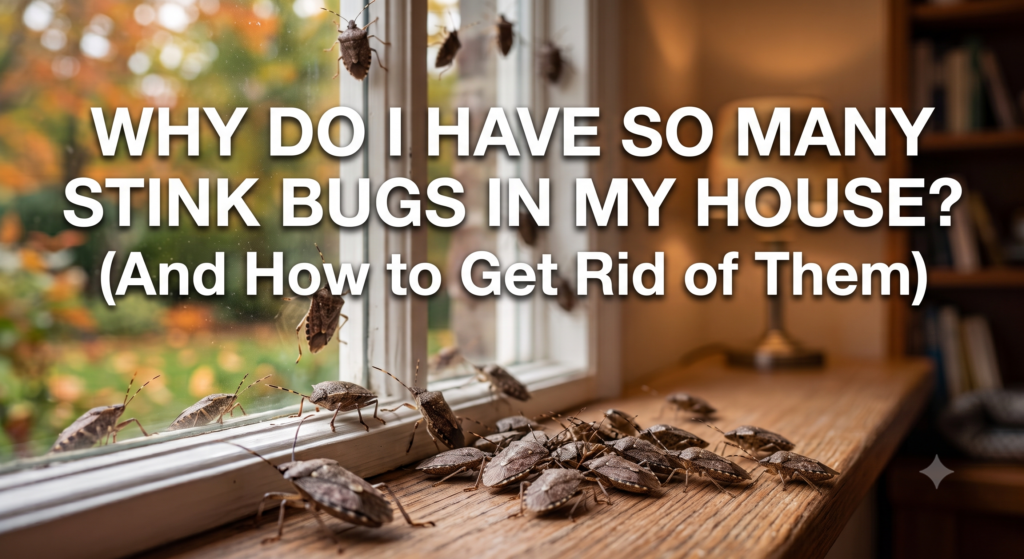
If you suddenly have stink bugs everywhere, crawling on windows, appearing in bathrooms, dropping from the ceiling, you’re not imagining it and you’re not alone. The brown marmorated stink bug (Halyomorpha halys) invades homes in the fall in numbers that can genuinely feel overwhelming. So if you’re asking yourself, why do I have so many stink bugs in my house? Here’s exactly why it’s happening and what actually works to stop the infestation.
Why Do I Have So Many Stink Bugs in My House?
Stink bugs live outdoors all spring and summer, feeding on plants, fruits, and garden crops. When temperatures start dropping in fall, they do something called overwintering, when they seek a warm, sheltered place to go dormant until spring. Your house is ideal.
They’re drawn in by three things: warmth, light, and the scent signals of other stink bugs that have already found entry points. Once a stink bug finds a suitable winter shelter, it releases an aggregation pheromone — a chemical signal that tells other stink bugs: good spot, come here. This is why what starts as a few bugs can quickly become dozens in the same area.
The peak invasion window is late August through October. The brown marmorated stink bug — responsible for most home invasions — is an invasive species from East Asia that arrived in the U.S. in the mid-1990s and has since spread to 47 states.
Do stink bugs actually infest your home?
Not in the way most people mean the word. Stink bugs do not reproduce indoors. They cannot feed inside your house — they need plant matter to survive. What they do is go dormant inside wall voids, attics, crawl spaces, and hidden areas and wait out the winter.
The reason it feels like an infestation is twofold. There can be hundreds hiding in wall voids without a single one being visible. And spring is when they reveal themselves — warming temperatures wake them up and they emerge into living spaces while trying to find their way back outside. Many homeowners who had no idea they had stink bugs all winter find them everywhere in March and April.
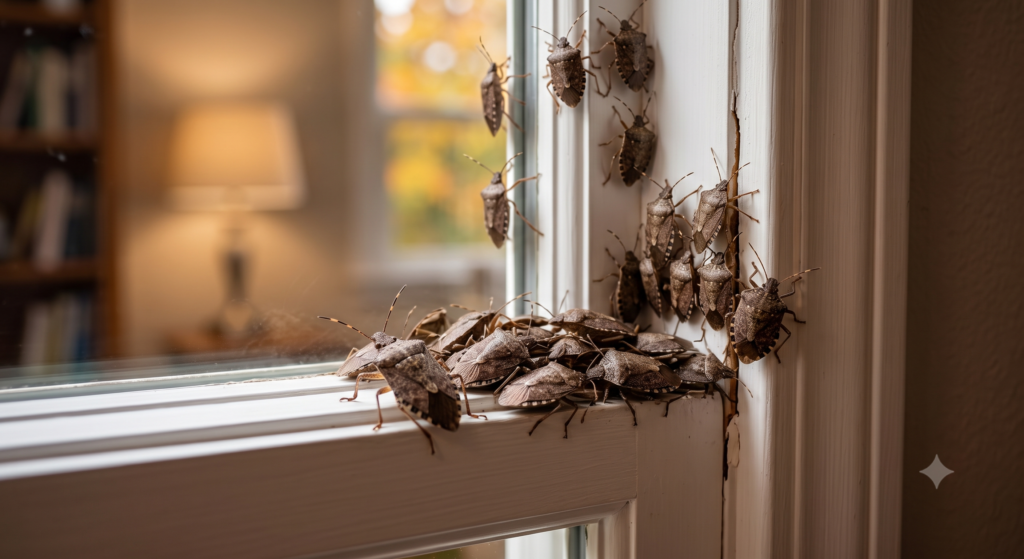
Why you should never crush a stink bug indoors
Crushing them releases their defensive odor, the chemical that gives them their name, and that smell can linger for hours and bind to fabric, carpet, and upholstery.
More critically: their scent functions as an aggregation pheromone. Killing a stink bug indoors can signal other stink bugs to gather in the same area. This is why professionals focus on exclusion rather than killing them inside.
To remove them safely: vacuum immediately and empty outside, capture in a jar and release outdoors, set a soapy water pan under a light source overnight, or use a UV light trap.
Where are stink bugs hiding in your house?
Most are completely invisible during winter — inside wall voids on the south and west sides of the structure, attics, crawl spaces, behind siding, and around window frames. The ones you see are either late arrivals or spring bugs waking up disoriented on the way back out.
How to get stink bugs out of your house
A light trap works well — lamp over a pan of soapy water in a dark room overnight. Vacuum for large numbers but empty outside immediately. Indoor sprays are largely ineffective and not recommended — dead bugs inside walls attract secondary pests like carpet beetles.
How to keep stink bugs from coming back
Act before September. Seal the exterior fully — siding gaps, window and door frames, utility penetrations, chimney gaps, attic vents. Repair torn screens. Reduce outdoor lighting. Apply a perimeter insecticide treatment in early-to-mid September before the fall migration begins. Trim vegetation away from the house and monitor host plants like redbud, maple, and crabapple in late summer.
When to call a professional
Recurring yearly infestations or very large numbers warrant professional treatment — timed exterior barrier application in early September, before the bugs start moving, is significantly more effective than reacting after they’re already inside.
Filed under