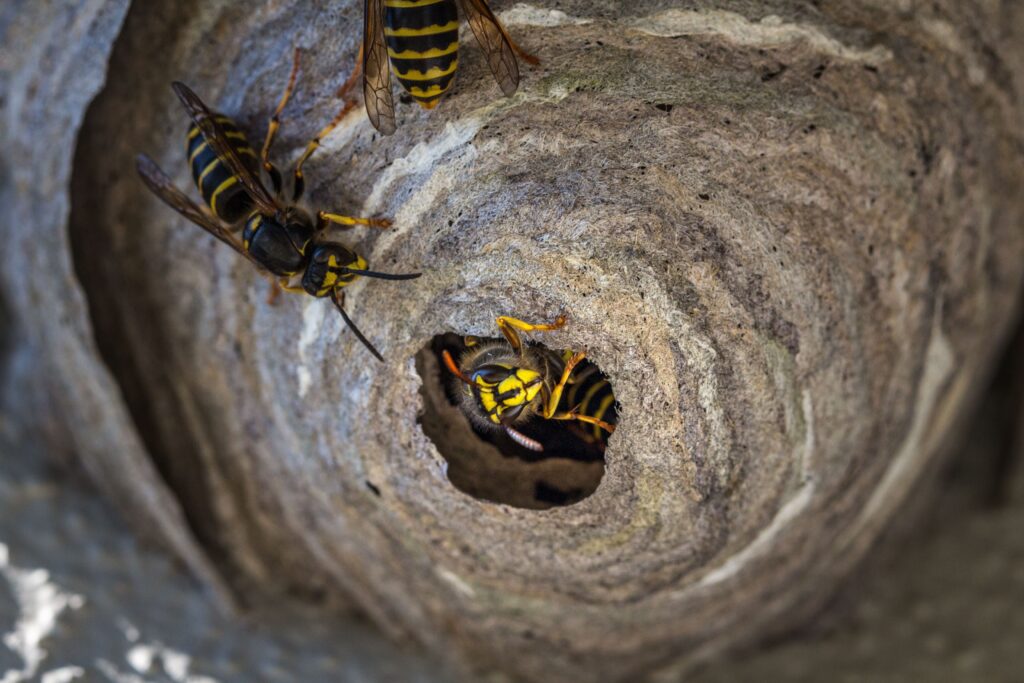
Wasps are among the most intimidating and dangerous seasonal pests to encounter around a home. Because they are highly territorial, fiercely protective of their nests, and capable of stinging repeatedly, managing them requires extreme caution. Successful wasp control focuses on early nest detection and using targeted treatments that allow you to keep your distance.
The Complete Guide to Household Wasps
Wasps are aggressive, highly organized insects that can quickly turn porches, decks, and yards into active hazard zones. While they play a beneficial role in nature by eating garden pests, their presence directly around doorways, rooflines, and play areas poses a serious safety risk to your family and pets.
1. Identification: Who is Nesting on Your Property?
Distinguishing between different wasp species—and telling them apart from beneficial honeybees—is critical. Their nesting habits dictate exactly how you must approach treating them.
Look closely at physical features, flight behaviors, and nest structures to confirm what you are dealing with:
-
Paper Wasps: Slender, medium-sized, with long legs that dangle distinctively beneath them when they fly. They are typically brown with yellow or reddish markings. They build exposed, umbrella-shaped paper nests with visible open comb cells, usually tucked under roof eaves, door frames, and deck railings. They are moderately aggressive.
-
Yellowjackets: Smaller, compact, and instantly recognized by their bright, alternating black and yellow striped abdomens. They are notoriously aggressive and build large, paper-covered nests hidden underground, inside old rodent burrows, or deep within structural wall voids and attics.
-
Hornets (e.g., Bald-Faced Hornets): Large, robust, and dark dark brown or black with distinct white or ivory markings on their faces. They build massive, fully enclosed, tear-drop-shaped gray paper nests hanging high in tree branches, utility poles, or peaks of roofs. They are highly aggressive and possess a deeply painful sting.
2. Why They Enter & What Keeps Them There
Wasps are drawn to residential properties by structural nesting opportunities and changing dietary needs throughout the spring and summer cycles.
-
Abundant Structural Shelters: Overhangs, soffits, window wells, hollow porch railings, and unsealed attic vents mimic the natural cliff faces and tree hollows that wasps seek out to build protected, dry shelters for their colonies.
-
The Spring Protein Demand: In spring and early summer, the queen is rapidly raising larvae. Worker wasps hunt aggressively for proteins to feed the young. Yards with active caterpillar populations, open spiders, or outdoor pet food dishes are primary targets.
-
The Late-Summer Sugar Craving: In August and September, the nest’s reproductive cycle slows, and the workers shift their diet exclusively to simple sugars. This is when they become desperate pests, swarming around garbage cans, soda cans, fallen backyard fruit, and outdoor dining tables.
3. Potential Harm & Damage
Immediate Health Priority: Unlike bees, wasps possess barbless stingers, meaning a single insect can sting an individual repeatedly without losing its stinger or dying. They present a major biological safety risk.
Human, Child & Pet Health
-
Anaphylactic Shock: For individuals with an underlying allergy to wasp venom, a single sting can trigger anaphylaxis—a life-threatening medical emergency causing throat swelling, severe drop in blood pressure, and respiratory failure.
-
Pheromone-Induced Swarming: When a wasp stings or is crushed, it releases an airborne alarm pheromone. This chemical signal instantly alerts the rest of the hidden colony, causing dozens of wasps to launch a coordinated, aggressive swarm attack against children or pets in the area.
Damage to the Property
-
Drywall and Insulation Degradation: When yellowjackets build nests inside wall voids, they will actively chew through the home’s drywall and fiberglass insulation to expand their nesting space. Homeowners frequently discover an infestation when they notice a soft, damp, discolored spot on their ceiling or wall that a wasp suddenly chews completely through.
3.5 When to Bypass DIY and Call a Professional
While a small, early-stage paper wasp nest can be handled from a distance, larger setups require professional gear and chemical intervention.
3 Signs It’s Time to Call an Exterminator
-
Hidden Wall-Void Nests: If you see wasps consistently flying into a tiny gap in your brickwork, siding, or roofline, never seal the hole shut with caulk. This traps them inside, forcing them to chew through your interior drywall to escape into your living room. A professional must inject specialized chemical dusts to clear the void safely.
-
Enclosed Aerial Nests Larger Than a Grapefruit: Massive hornets’ nests contain hundreds of highly aggressive guards. Attempting to spray these with retail cans often results in a furious swarm before the chemical can penetrate the thick, paper exterior layers.
-
Ground Nests Near Main Walkways: Underground yellowjacket nests are incredibly dangerous because stepping near the entry hole sends vibrations down into the chamber, triggering an immediate, blind mass attack on whoever is walking by.
4. Prevention: How to Keep Them Out
Wasp defense relies on early intervention in early spring and eliminating the scent signals that draw them to outdoor living zones.
Structural Proofing
-
Spring Soffit Screening: Inspect your rooflines, eaves, and soffit vents in April. Ensure all mesh screens are intact and caulk any gaps along the trim boards where an overwintering queen might try to slip inside to build a colony.
-
Fake Decoy Nests: Wasps are intensely territorial and will rarely build a nest within 6 to 9 meters of an established rival colony. Hanging inexpensive, paper lantern-style “decoy nests” under your porch eaves early in the spring can trick scouting queens into flying elsewhere.
Natural Deterrents (Scent Barriers)
-
Peppermint Oil Shield: Wasps completely detest the volatile oils found in mint. Mixing 20 drops of pure peppermint essential oil with water and spraying it heavily along your porch ceilings, window sills, and deck structures forms a powerful natural barrier.
-
Garbage Management: Keep all outdoor trash bins tightly sealed with locking lids. Wash out the interiors of recycling bins regularly with an ammonia-based cleaner to completely strip away the fermenting sugar scents that attract late-summer foragers.
5. Control & Eradication Methods
If you must treat a visible nest yourself, timing is everything. Always treat the nest at night or just before dawn. Wasps are sluggish in the cold, dark hours, and the entire colony will be inside the nest rather than out foraging, ensuring you eliminate the whole population.
Treatment Protocols
-
Long-Distance Knockdown (Step 1: The Cold-Strike Aerosol): Standing at a safe distance of 3 to 4 meters, blast the nest directly with a specialized jet-stream wasp freeze spray. Aim straight for the center opening of the nest. These sprays are designed to drop the insects instantly on contact, freezing their nervous systems before they can fly out to attack you. Wear thick clothing, gloves, and safety glasses during application.
-
Dust the Entry Channels (Step 2: Residual Void Control): For underground nests or gaps in structural trim, puff a heavy layer of Boric Acid or professional insecticidal dust directly into the entry hole using a handheld extension duster. As the returning wasps crawl through the narrow opening, the dust clings to their bodies, systematically poisoning the colony through grooming habits.
-
Set Up Sugar Traps (Step 3: Late-Summer Decoy Traps): Hang yellowjacket traps along the outer perimeter of your yard, at least 10 meters away from your active seating areas. Bait them with apple juice, beer, or sugar water in late summer. This draws the frantic foraging wasps away from your patio or deck, catching them inside the entry funnel where they cannot escape.