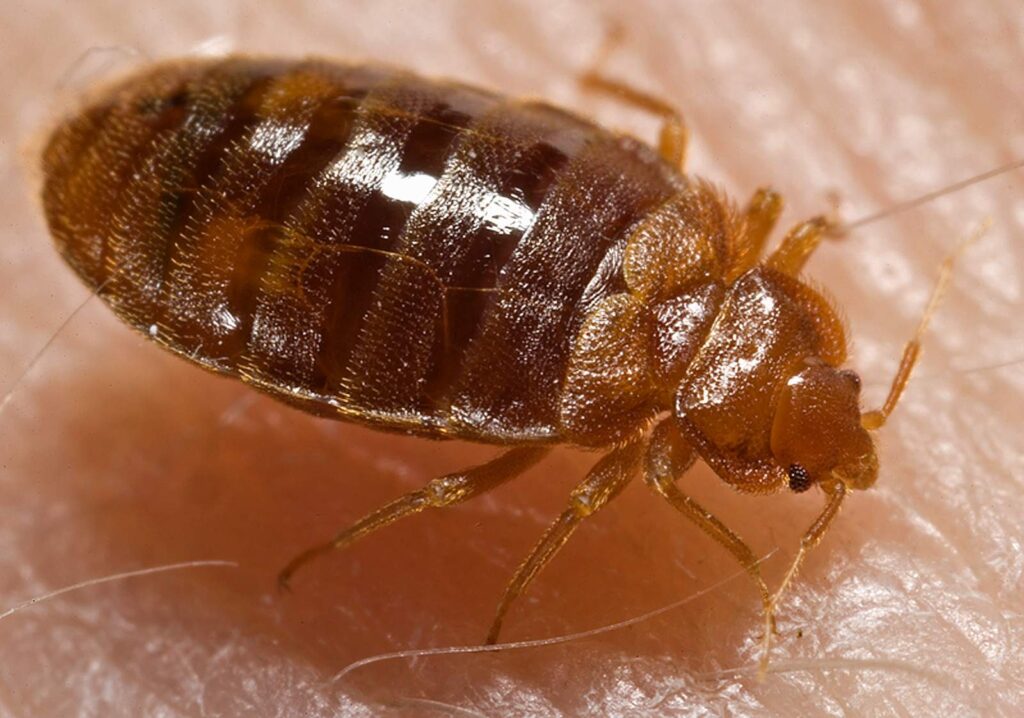
Bed bugs are legendary survivors. They do not discriminate between a dirty home and a pristine one; they only care about proximity to a warm host. Catching them early is the key to preventing a widespread household infestation.
1. Identification: Who is in Your House?
Bed bugs change size and color significantly depending on their stage of life and whether they have recently fed. Look closely at your mattress seams, headboards, and bedding for the following signs and developmental stages:
-
Adult Bed Bugs: Roughly the size and shape of an apple seed. They are flat, oval-shaped, and reddish-brown. If they have recently had a blood meal, their bodies swell up, elongating into a balloon-like cylinder shape, and turn a bright, deep red.
-
Nymphs (Juveniles): Tiny, translucent, or pale yellow insects. Because they are nearly see-through, they are incredibly difficult to spot with the naked eye until they feed and fill up with dark red blood.
-
The Telltale Signs: Often, you will see the signs of bed bugs before you see the bugs themselves. Look for tiny, dark brown or black ink-like spots (fecal stains) on sheets, clusters of empty translucent skins they shed as they grow, and tiny white, sticky eggs tucked into crevices.
2. Why They Enter & What Keeps Them There
Unlike ants or cockroaches, bed bugs are completely indifferent to crumbs, grease, or open garbage. They do not walk in through open windows or cracks in your foundation.
-
Hitchhiking Masters: Bed bugs enter your home entirely by transport. They crawl into the seams of luggage, backpacks, clothing, and purses in public spaces—such as hotel rooms, public transit, movie theaters, or shared workspaces—and ride straight back to your living room.
-
Secondhand Furnishings: Bringing used mattresses, bed frames, couches, or even clothing into the home without a thorough inspection is one of the most common ways infestations get started.
-
Proximity to the Host: Bed bugs stay because you are there. They are attracted to the carbon dioxide you exhale and your body heat. Because they need a blood meal to progress through each stage of their life cycle, they will anchor themselves within a few feet of where you sleep or sit for long periods.
3. Potential Harm & Damage
Anatomy of Risk: The good news is that bed bugs are not known to transmit or spread any blood-borne diseases to humans. Their harm is primarily physical, dermatological, and psychological.
Human, Child & Pet Health
-
Allergic Skin Reactions: Bed bug bites typically present as small, red, itchy welts, frequently arranged in a straight line or cluster of three (often colloquially called “breakfast, lunch, and dinner”). Scratching these intensely itchy bites can break the skin, leaving children and adults vulnerable to secondary bacterial skin infections like ecthyma or impetigo.
-
Sleep Deprivation & Anxiety: The psychological impact of a bed bug infestation is immense. Inhabitants frequently suffer from severe insomnia, hyper-vigilance, paranoia, and chronic anxiety, drastically reducing overall mental well-being.
-
Anemia in Severe Cases: In rare, extreme infestations where thousands of bugs feed nightly, young children or small pets can suffer from iron-deficiency anemia due to chronic blood loss.
Damage to the Property
-
Cosmetic Ruin: Bed bugs do not chew through drywall or compromise wooden beams, but their dark fecal spotting can permanently stain mattresses, expensive box springs, luxury linens, and nearby wallpaper.
4. Prevention: How to Keep Them Out
Because bed bugs cannot be deterred by keeping a clean kitchen, prevention relies entirely on vigilant travel habits and keeping physical barriers on your bed.
Travel and Inspection Habits
-
The Hotel Inspection: When traveling, never place your suitcase directly on the bed or carpeted floor. Keep it on the luggage rack or in the bathroom tile area. Pull back the hotel bedsheets and check the mattress seams and headboard for dark spots before unpacking.
-
Post-Travel Laundry Isolation: As soon as you return from a trip, dump all clothes directly into the washing machine. Wash them and run them through the dryer on high heat for at least 30 minutes—the heat is lethal to all bed bug life stages.
Physical Barriers
-
Encase the Mattresses: Install high-quality, bed-bug-proof zippered encasements on both your mattress and box spring. This traps any existing bugs inside so they eventually die, and prevents new bugs from finding deep hiding spots in the tufts and folds.
5. Control & Eradication Methods
If you have an infestation, standard over-the-counter “bug bombs” or foggers are highly discouraged. They lack the residual strength to penetrate deep cracks, and instead, the chemicals cause the bugs to scatter into adjacent walls and rooms, multiplying the problem.
Treatment Protocols