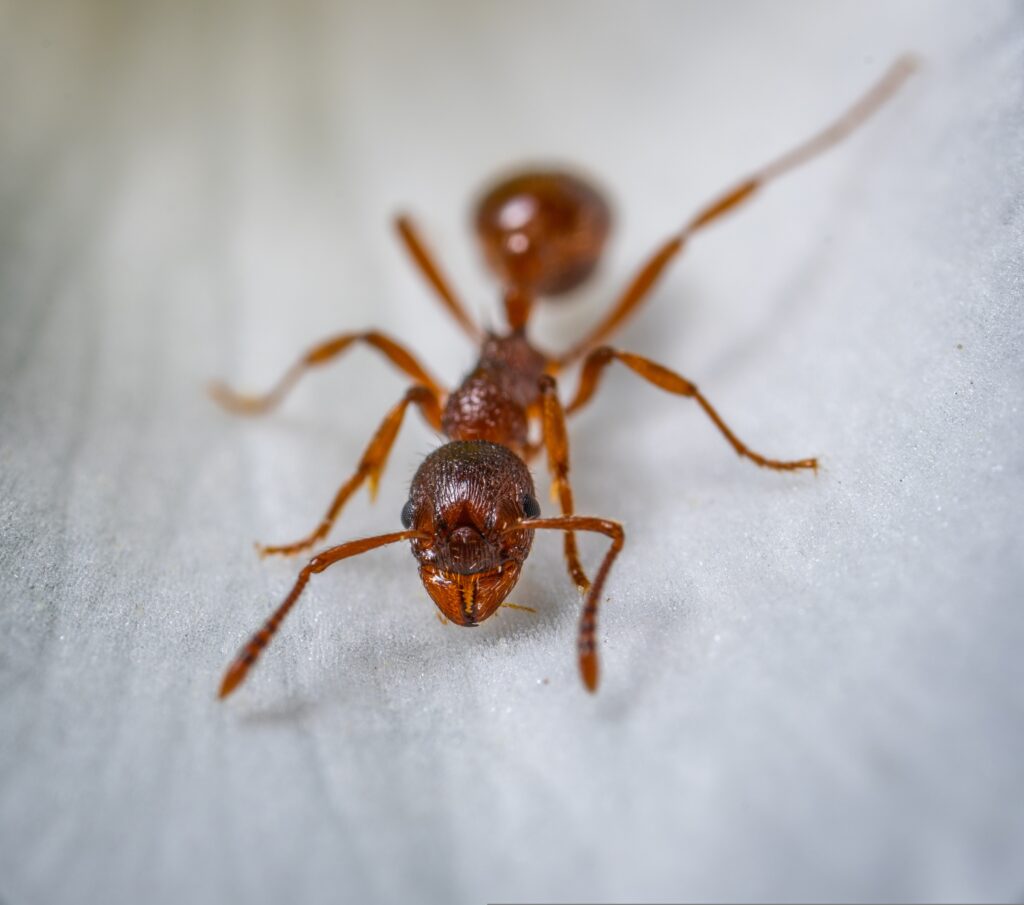
The Complete Guide to Household Ants
Ants are the single most common household pest. While most species are simply a nuisance, certain types can cause structural damage or pose health risks. Understanding what brings them inside and how their colonies operate is the key to keeping them out.
1. Identification: Who is in Your House?
Not all ants are the same, and identifying the species helps determine the best treatment method. Look closely at the size, color, and behavior of the ants to identify the three most common indoor invaders:
Carpenter Ants: Large ($6\text{mm}$ to $13\text{mm}$), usually solid black or dark red. They are often spotted near damp wood, window sills, or roof lines.
Odorous House Ants: Small ($2.5\text{mm}$ to $3\text{mm}$), dark brown or black. If you crush one, they release a distinct, unpleasant odor reminiscent of rotten coconuts.
Pharaoh Ants: Tiny ($1.5\text{mm}$ to $2\text{mm}$), pale yellow to light red with a darker abdomen. They prefer warm, humid areas like kitchens and bathrooms and are notorious for nesting inside wall voids.
2. Why They Enter & What Keeps Them There
Ants are highly organized foragers. They enter your home for three simple reasons: food, water, and shelter.
The Scout System: A single “scout” ant finds a food source (like a drop of honey or a pet food bowl) and leaves a chemical pheromone trail on the ground. The rest of the colony follows this invisible highway straight into your home.
Food Attractants: They are highly drawn to simple sugars, carbohydrates, fats, and proteins. Unsealed pantry items, sticky soda spills, and dirty dishes are primary targets.
Moisture Sources: Ants need water to survive. Leaky pipes, condensation under sinks, potted plants, and damp crawl spaces will attract them even if food is scarce.
3. Potential Harm & Damage
Myth Busting: Most common household ants do not carry diseases on their bodies the way filth-flies or cockroaches do, nor do they feed on the structural wood of your home.
However, they still present distinct risks to your living space:
Human, Child & Pet Health
Food Contamination: Ants walk across unsanitary surfaces before crawling over your food, potentially tracking bacteria into pantries and onto countertops.
Bites and Stings: While most common house ants cannot bite hard enough to hurt humans, certain species like Fire Ants or Harvester Ants deliver painful, stinging bites that can cause allergic reactions in children and pets.
Damage to the Property
Structural Hollows: Carpenter Ants do not eat wood, but they chew through it to excavate smooth galleries for their nests. Over time, an undetected infestation can severely compromise the structural integrity of wooden beams, studs, and joists.
Electrical Shortages: Certain species (like the invasive Tawny Crazy Ant) are bizarrely attracted to electrical currents. They nest inside outlets, appliances, and breaker boxes, chewing through wires and causing costly equipment failures.
4. Prevention: How to Keep Them Out
An ant-free home relies heavily on making the environment uninviting. You can use structural fixes and natural scent deterrents to build a protective barrier.
Structural Proofing
Seal Entry Points: Use silicone caulk to seal cracks around window frames, exterior doors, utility lines, and foundation gaps.
Manage Landscapes: Keep tree branches and shrubs trimmed so they do not touch the side of the house, as these act as natural bridges for ants to bypass ground treatments.
Natural Deterrents (Scent Barriers)
Ants rely entirely on their sense of smell to navigate. Strong, aromatic substances disrupt their tracking abilities.
Mint (Peppermint): As you noticed with your own house, ants intensely dislike mint. The strong essential oils mask their pheromone trails. Planting mint around the foundation perimeter or wiping down baseboards with a mixture of water and peppermint essential oil works as a powerful natural shield.
White Vinegar: Sprayed directly onto countertops and floors, vinegar eliminates existing trail pheromones, confusing incoming foragers.
Cinnamon & Coffee Grounds: Sprayed or scattered near doorways, the intense odor prevents them from crossing the threshold.
5. Control & Eradication Methods
If you already have an infestation, wiping away the ants you see will not solve the problem. You must destroy the colony and the queen.
Treatment Protocols
1.Deploy Slow-Acting Baits:
Target the Queen
Place liquid or gel ant baits (like Terro) directly along known ant trails. The workers will drink the sweet, poisoned bait and carry it back to share with the colony, eventually killing the queen. Do not kill the ants eating the bait; let them return home.
2. Apply Natural Residual Dusts:
Perimeter Protection.
Puff Diatomaceous Earth (DE) into wall voids, behind appliances, and along baseboards. DE is a natural, mineral-based powder that breaks down the waxy outer layer of an ant’s exoskeleton, dehydrating them safely without chemicals.
3. Utilize Targeted Chemical Barriers:
Exterior Lines.
For severe cases or stubborn perimeter lines, use a specialized non-repellent residual spray (like Termidor or a commercial-grade spray) around the outdoor foundation. Unlike standard “spray-on-contact” killers like Raid, non-repellent sprays allow ants to walk through the barrier undetected, transferring the chemical back to the nest.